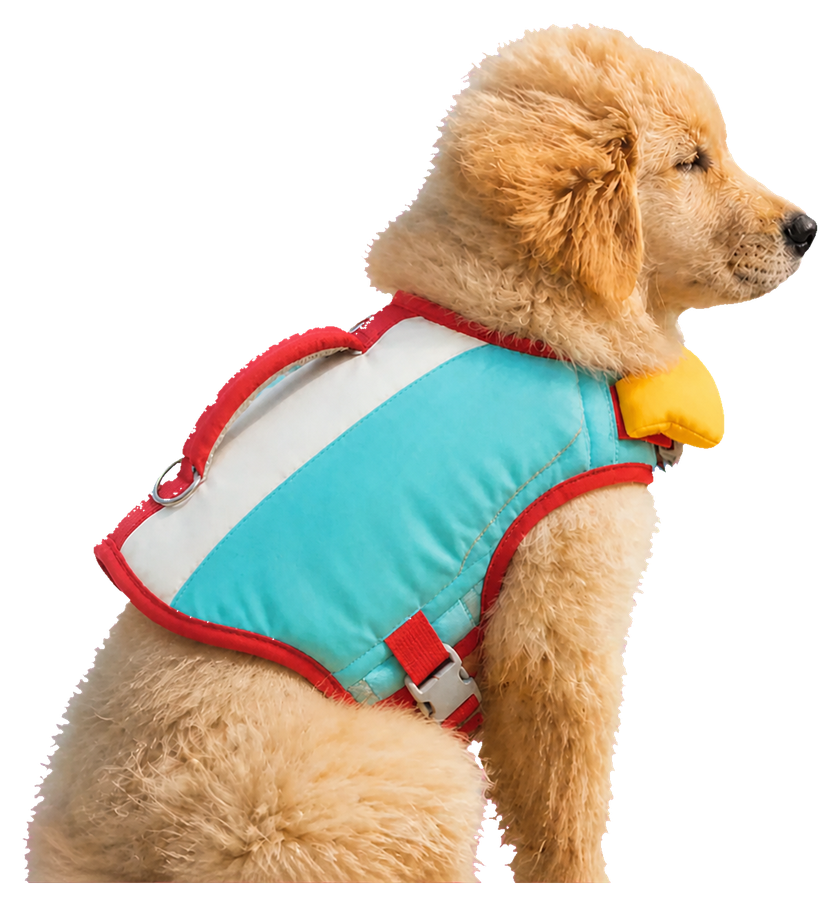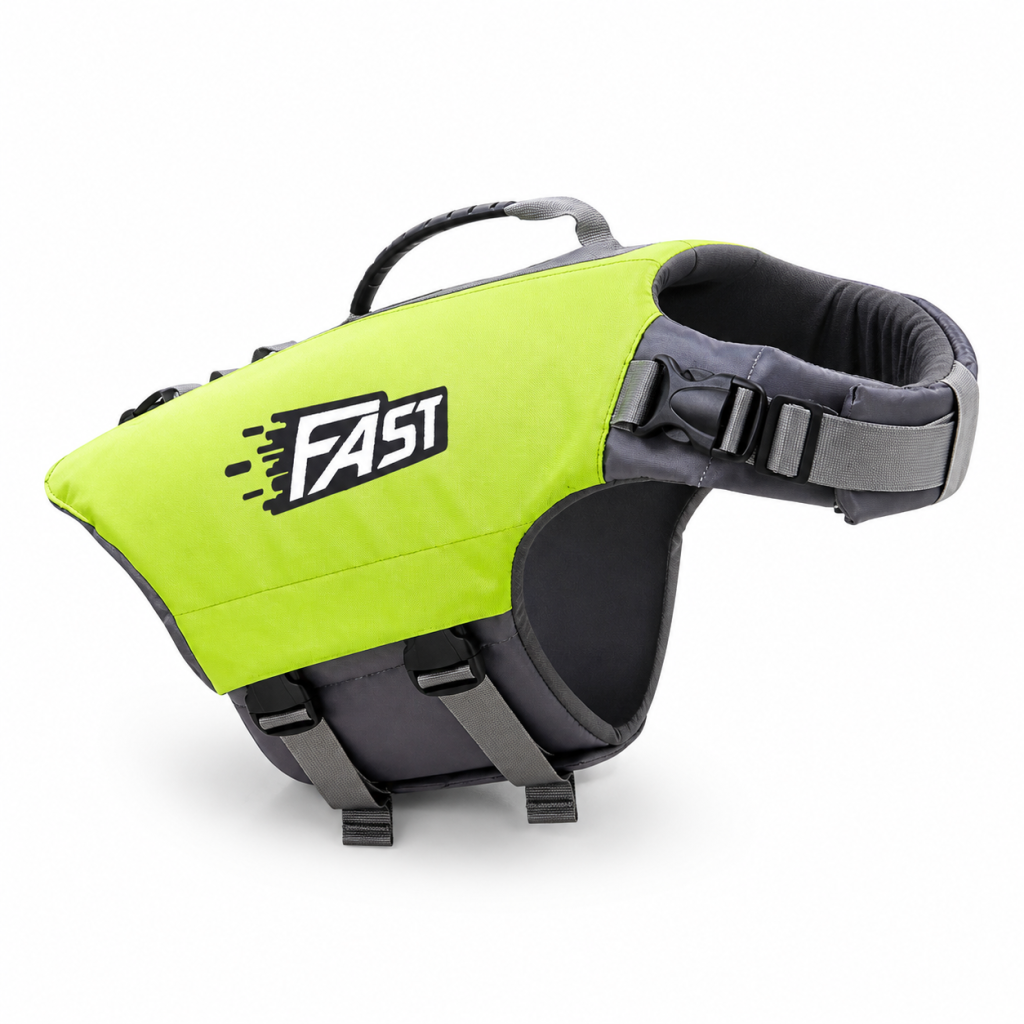
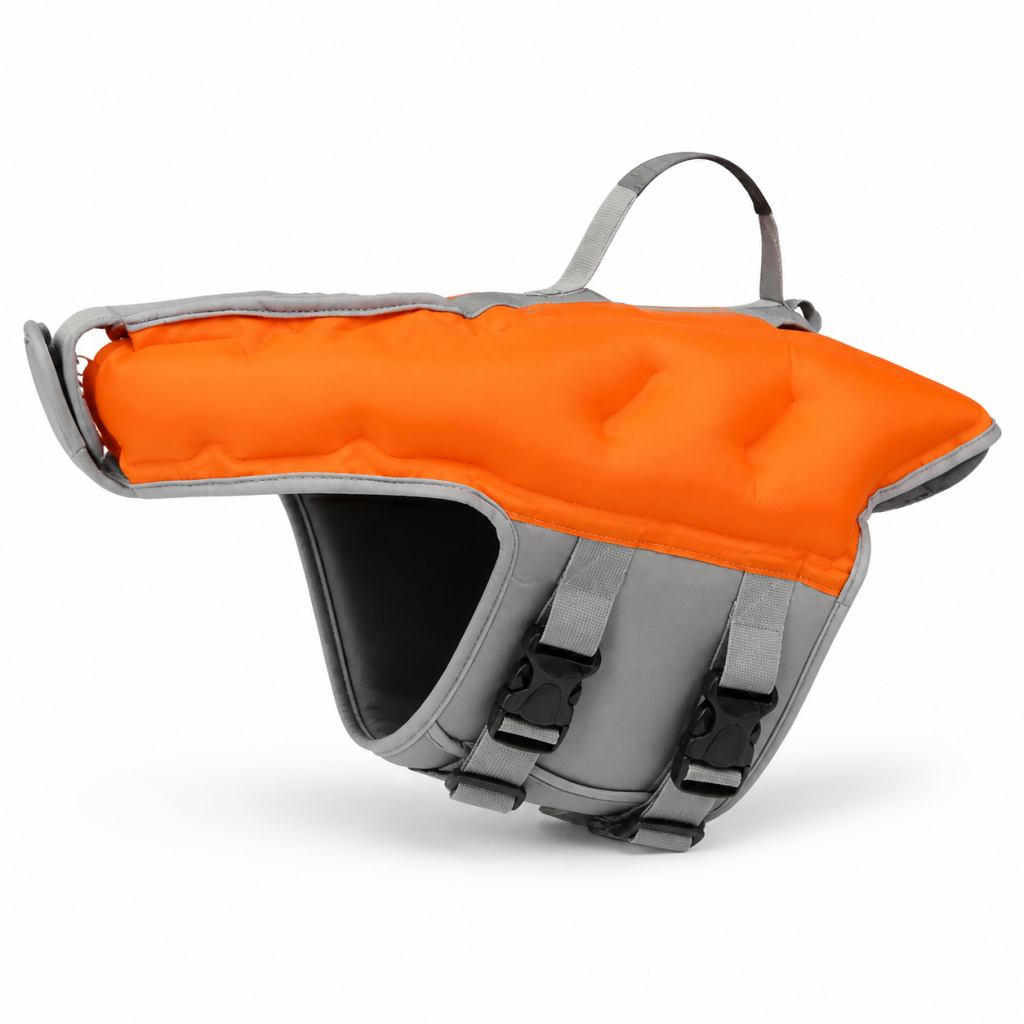

Dogs can swim in cool weather, but there is no single water temperature that is safe for every dog. A short, supervised dip that suits a healthy, confident adult dog may be too much for a puppy, senior dog, small dog, thin-coated dog, or a dog with a health condition. Wind, wet fur, time in the water, currents, and the distance to an easy exit all change the risk. In fall, water quality matters just as much as temperature: do not let a dog enter water covered by a health advisory or water that looks discolored, scummy, or unusually foamy, or smells bad. Start with a brief shallow-water check, stay close enough to intervene, and end the session at the first change in movement or behavior. A life jacket can support buoyancy; it cannot prevent hypothermia or make contaminated water safe.
Is there one safe water temperature for dogs?
No. A temperature chart looks reassuring, but it leaves out the dog standing at the shoreline. Coat, body size, age, health, swimming experience, wind, sun, and time in the water all affect how quickly a dog loses heat. A calm retriever taking a brief wade and a small puppy paddling into wind are not having the same outing, even when the thermometer reading is identical.
This is why we do not publish a universal “safe below this number” rule. Use the conditions as a reason to shorten or cancel a swim, not as permission to stay in for a fixed number of minutes. When the air feels cool, the wind is brisk, or your dog is already wet, begin with feet and legs in shallow water. If the dog hesitates, changes gait, or looks uncomfortable, that is enough information to stop.
| What to check | Why it changes the decision | Conservative response |
|---|---|---|
| Dog’s age and health | Puppies, seniors, and dogs with medical conditions may regulate body temperature less effectively. | Ask your veterinarian before cold-water outings; choose a dry walk when uncertain. |
| Body and coat | Small bodies, low body fat, and thin coats can lose heat quickly. | Keep the first exposure shallow and very brief. |
| Wind and shade | Wet fur plus moving air can cool a dog after leaving the water. | Prepare a dry towel and sheltered exit before the dog goes in. |
| Current and exit | Extra effort and a difficult climb increase fatigue. | Use calm water with a clear, close exit; skip moving water. |
| Water quality | Cold is not the only fall hazard. Harmful algal blooms can make animals seriously ill. | Check local advisories and keep the dog out when water looks or smells wrong. |
A five-minute check before a fall swim
Pause at the edge instead of unclipping the leash immediately. First, look for posted warnings and check the local park, health department, or water authority website. Then scan the shoreline for scum, streaks, paint-like patches, unusual foam, dead fish, or a strong odor. The CDC’s harmful algal bloom guidance says to stay out of discolored, scummy, or smelly water and to follow swimming and fishing advisories.
- Check the water: read current advisories and inspect the shoreline before every visit, including familiar lakes.
- Check the exit: choose a place where the dog can stand and leave without a steep bank, ladder, waves, or boat traffic.
- Check the dog: skip the swim if your dog is tired, unwell, reluctant, or still cold from the trip.
- Check the gear: confirm that straps lie flat and the shoulders and throat are clear before anything gets wet.
- Set up the finish: have fresh water, a towel, leash, and a warm vehicle or indoor space ready.
If any one of these checks fails, make it a shoreline walk. A missed swim is a small inconvenience; trying to solve bad water, a hard exit, or an uncomfortable dog with more equipment is the wrong trade.
What should dog owners know about blue-green algae?
Blue-green algae is a common name for cyanobacteria. The US Environmental Protection Agency explains that some cyanobacteria can produce potent toxins. Blooms can occur in lakes, reservoirs, streams, rivers, wetlands, and other waters, so “freshwater” does not automatically mean safe water.
Dogs face exposure not only while swimming. They may drink from the edge, lick wet fur after getting out, or investigate material along the shore. The CDC warns that animals can become very sick or die within hours after contact with harmful algae or cyanobacteria. If a dog seems ill after going in or near suspect water, contact a veterinarian immediately. Do not wait for an online checklist to confirm poisoning.
The practical rule: a swimsuit, rash guard, or life jacket does not filter water, stop a dog from drinking, or make an algal bloom safe. When an advisory is active or the water looks questionable, keep the dog out.
What does each piece of water gear actually do?
Cold-weather planning becomes muddled when every item is treated as “protection.” Each piece has a narrower job. A dog life jacket is buoyancy-support gear. A fitted rash guard is a coverage layer. A drying towel helps remove water after the session. None of them controls water quality, and ordinary dog swimwear should not be treated as thermal or medical equipment.
| Gear | Useful for | Does not do |
|---|---|---|
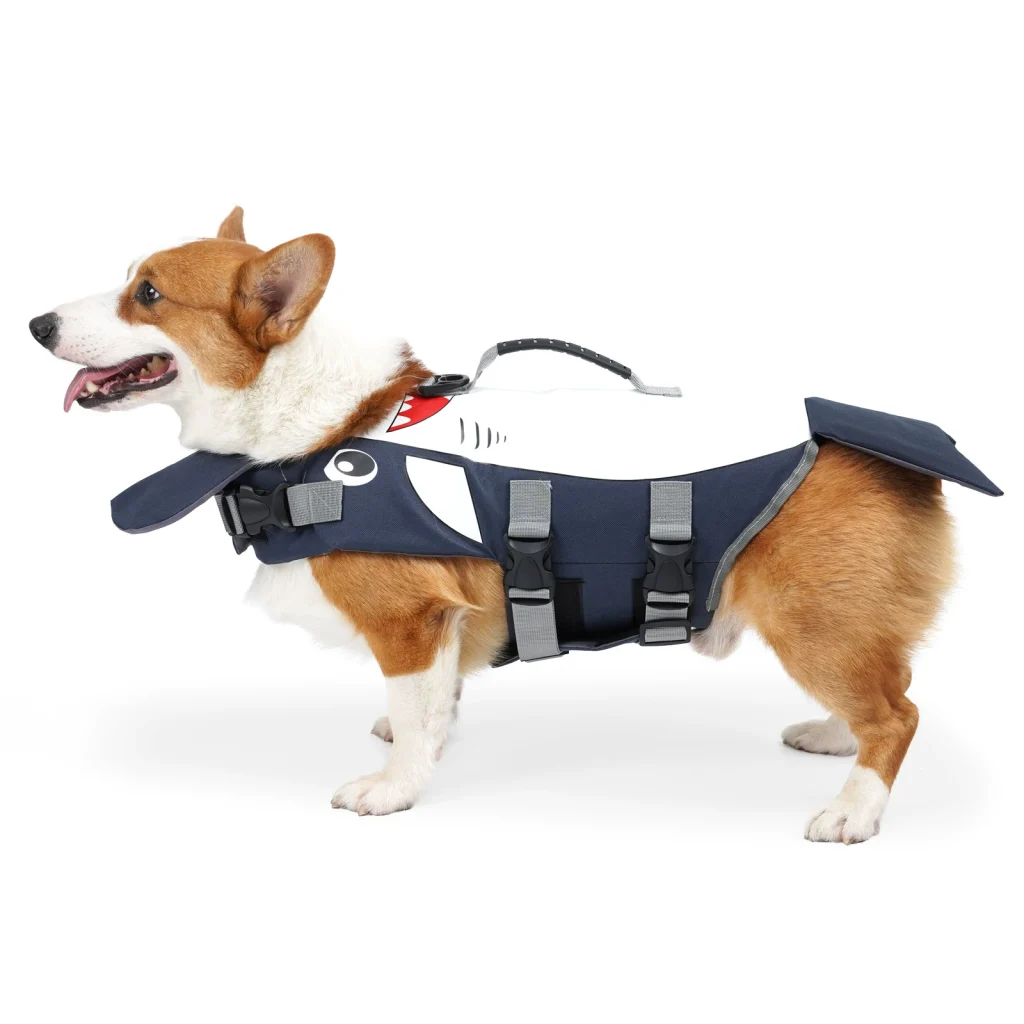
| Dog life jacket | Buoyancy support, visibility, and brief controlled assistance near an exit. | Prevent hypothermia, defeat current, or replace close supervision. |
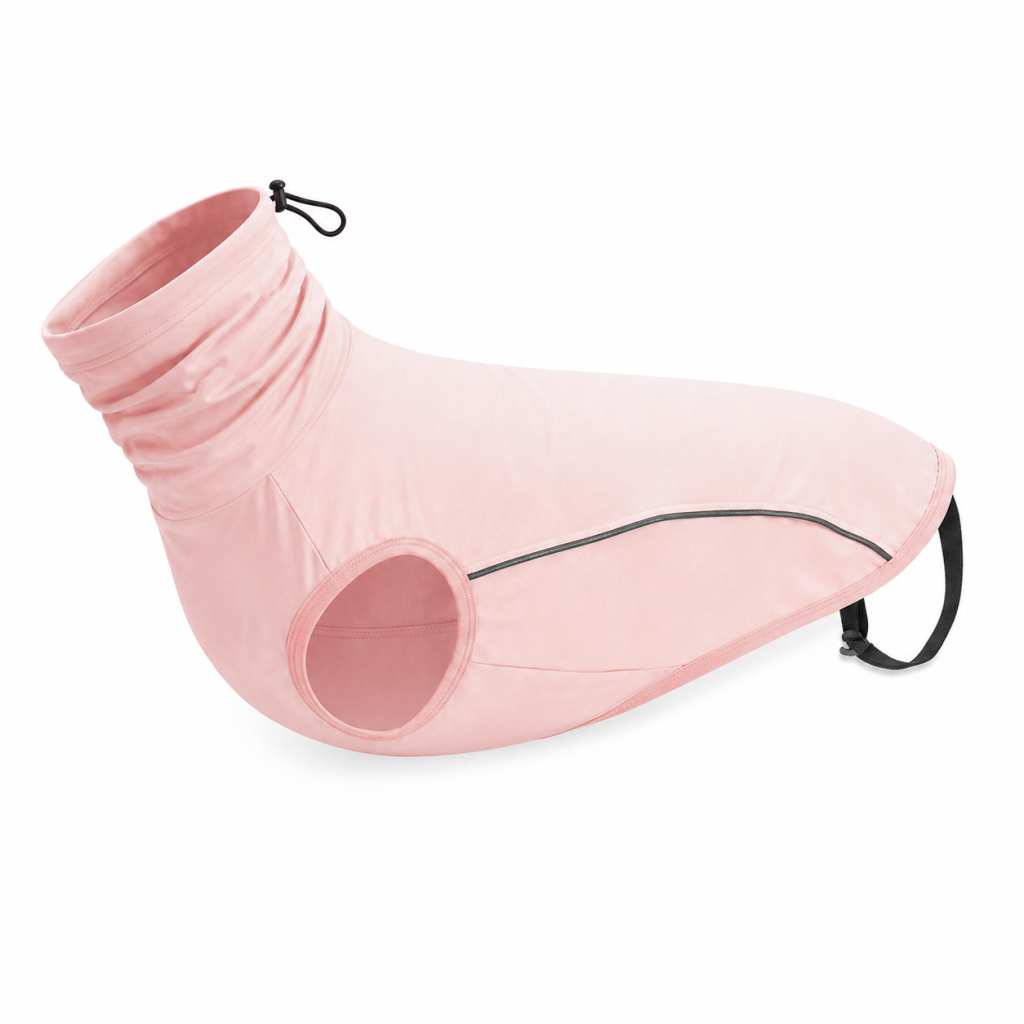
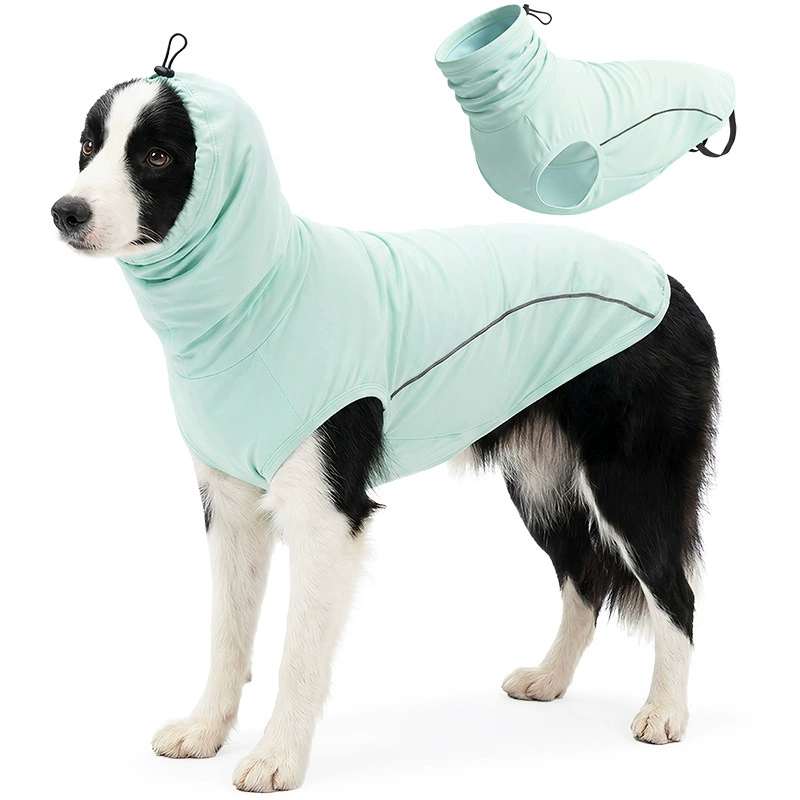
| Rash guard or swim vest | Fitted coverage from sun, splashes, sand, and some surface rubbing. | Provide certified flotation, make cold water warm, or block toxins. |
| Dry towel or wrap | Removing water promptly after the dog leaves the water. | Correct dangerous cooling or replace veterinary care. |
| Fresh drinking water | Reducing the temptation to drink from a lake, pond, or ocean. | Make an unsafe swimming area acceptable. |
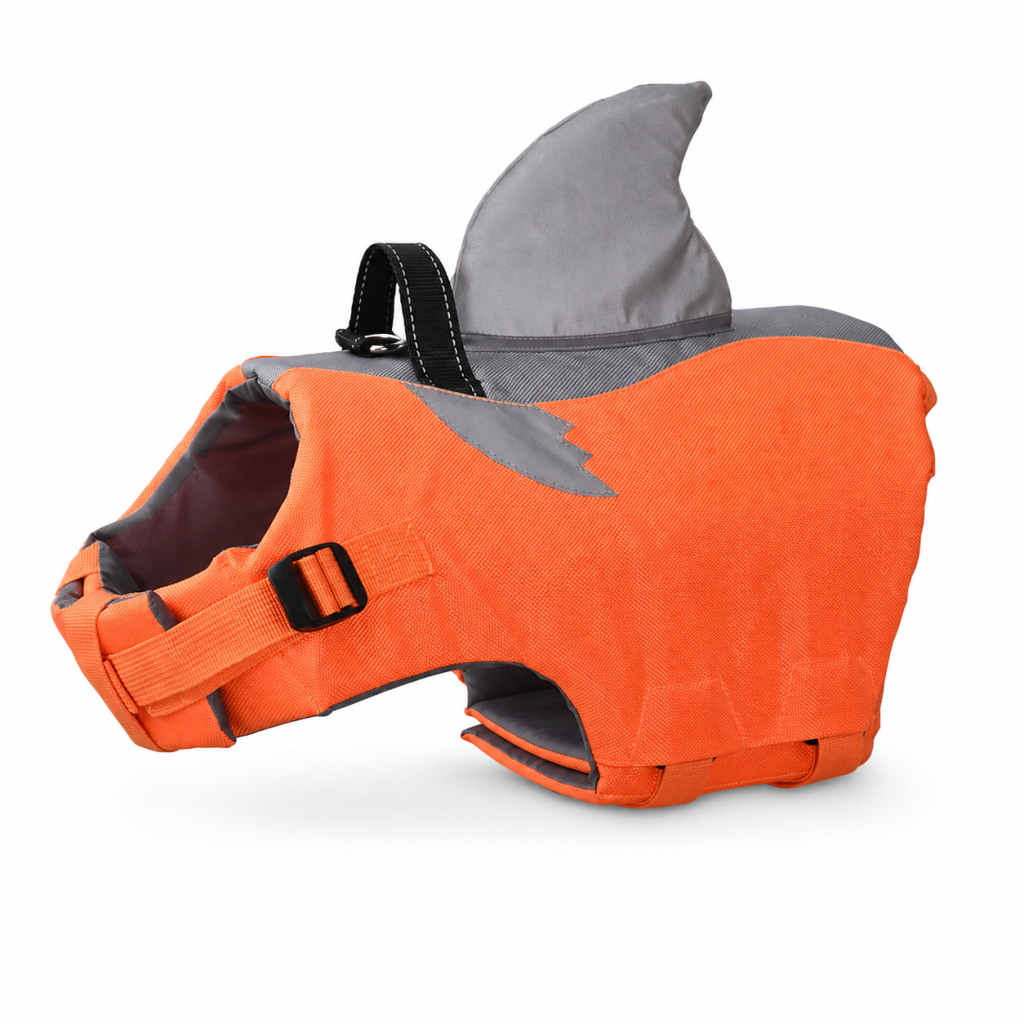
If buoyancy support is appropriate for the outing, review how a dog life jacket should fit before leaving home. The jacket shown above is Talenori’s Shark-Style Dog Life Jacket. For fitted coverage rather than flotation, compare the Dog Sun Protection Vest. Choose by the job the item needs to do, then check the individual fit.
Watch the dog, not the stopwatch
A fixed swim time cannot account for a sudden breeze, wet coat, extra effort, or a dog that is having an off day. Stay close and watch for a change from that dog’s normal movement. Shivering, muscle stiffness, lethargy, difficulty walking, disorientation, pale gums, and unusually cool ears, legs, feet, or paws are warning signs described in PetMD’s veterinarian-authored hypothermia guidance.
Do not wait for every sign to appear. Leave the water, move the dog into a warm vehicle or building, dry and wrap the dog, and call a veterinarian for guidance. Severe cooling is an emergency. PetMD also cautions against direct high heat such as a heating pad because of burn and shock risk; warming should be gradual while veterinary care is arranged.
What should you do after the swim?
Clip the leash on before removing water gear. Rinse the dog and the gear with clean fresh water, especially after salt water, pool water, or a muddy shoreline. Dry the chest, belly, armpits, ears, paws, and the area under straps rather than drying only the back. Offer fresh drinking water, then move out of wind while you check for rubbing, debris, or a change in behavior.
Take wet apparel off for the trip home. A soaked layer sitting against the body is not a warming layer. Rinse and air-dry the equipment separately using the steps in Talenori’s dog swimwear care guide. Before the next outing, inspect buckles, straps, seams, and handles while everything is fully dry.
Common questions about fall dog swimming
Does a dog life jacket keep a dog warm?
Do not assume it does. A life jacket’s main purpose is buoyancy support. Its panels may cover part of the torso, but it is not a guarantee against heat loss or hypothermia. End the swim when the dog shows discomfort or changes movement, regardless of what the dog is wearing.
Can a dog wear a rash guard under a life jacket in fall?
Only when the layer is thin, smooth, and does not change the controlling fit of the life jacket. Recheck the neck, shoulders, belly straps, and wet fit as one system. Our rash guard and life jacket layering guide covers that decision in detail. Do not add layers to persuade a cold or reluctant dog to remain in the water.
Is clear water free from harmful algae?
Appearance alone is not a complete safety test. Check current local advisories even when the water looks familiar, and stay out when an advisory is active. Visible discoloration, scum, or a bad smell is an additional reason to leave, not a substitute for official information.
The decision to make at the shoreline
A fall swim is reasonable only when the water is open and suitable, the dog is comfortable and healthy enough for the conditions, the exit is simple, and close supervision is possible from start to finish. Keep the first session shorter than you think you need. You can always plan another outing; you cannot turn an unsuitable swim into a good one by adding more gear.
For the broader distinction between coverage and buoyancy, read dog swimsuit vs. dog life jacket. Before using any flotation product, also review these common dog life jacket mistakes and Talenori’s main dog water safety guide.
Editorial note: Prepared for the Talenori Editorial Team with AI-assisted research and drafting. On September 28, 2026, the cited CDC, US EPA, and veterinarian-authored PetMD guidance was checked against the source pages, and the product links and images were checked against Talenori’s current catalog. This article has not been reviewed by a veterinarian. Talenori sells dog waterwear but does not provide veterinary diagnosis. We intentionally do not set a universal safe-water temperature because individual dogs and conditions vary. Contact your veterinarian about your dog’s health or any suspected cold or toxin exposure.