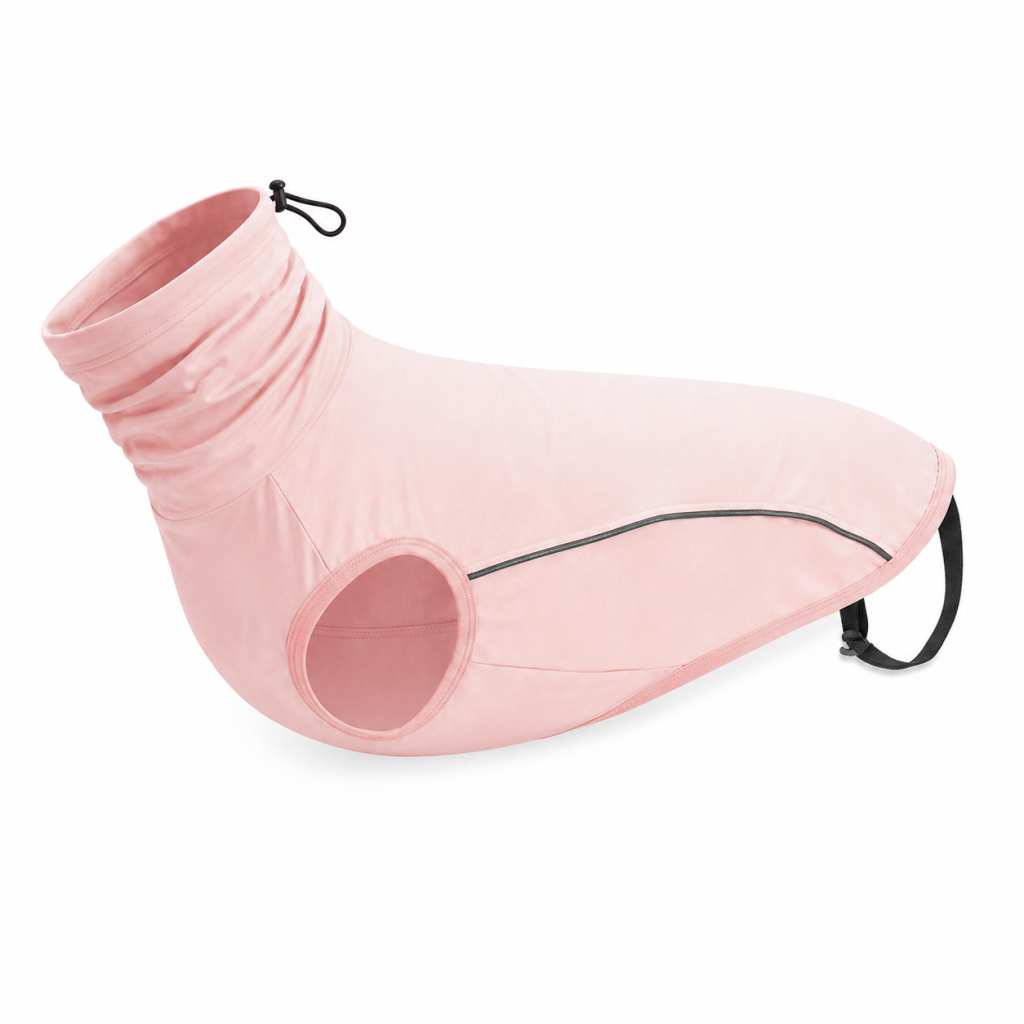

A dog swimsuit is fitted swim apparel; a dog life jacket is buoyancy support. Choose a swimsuit or rash guard when your dog needs light coverage, quick-dry comfort, or sun-aware layering. Choose a life jacket when your dog needs help staying visible and supported near docks, boats, pools, lakes, or open water.
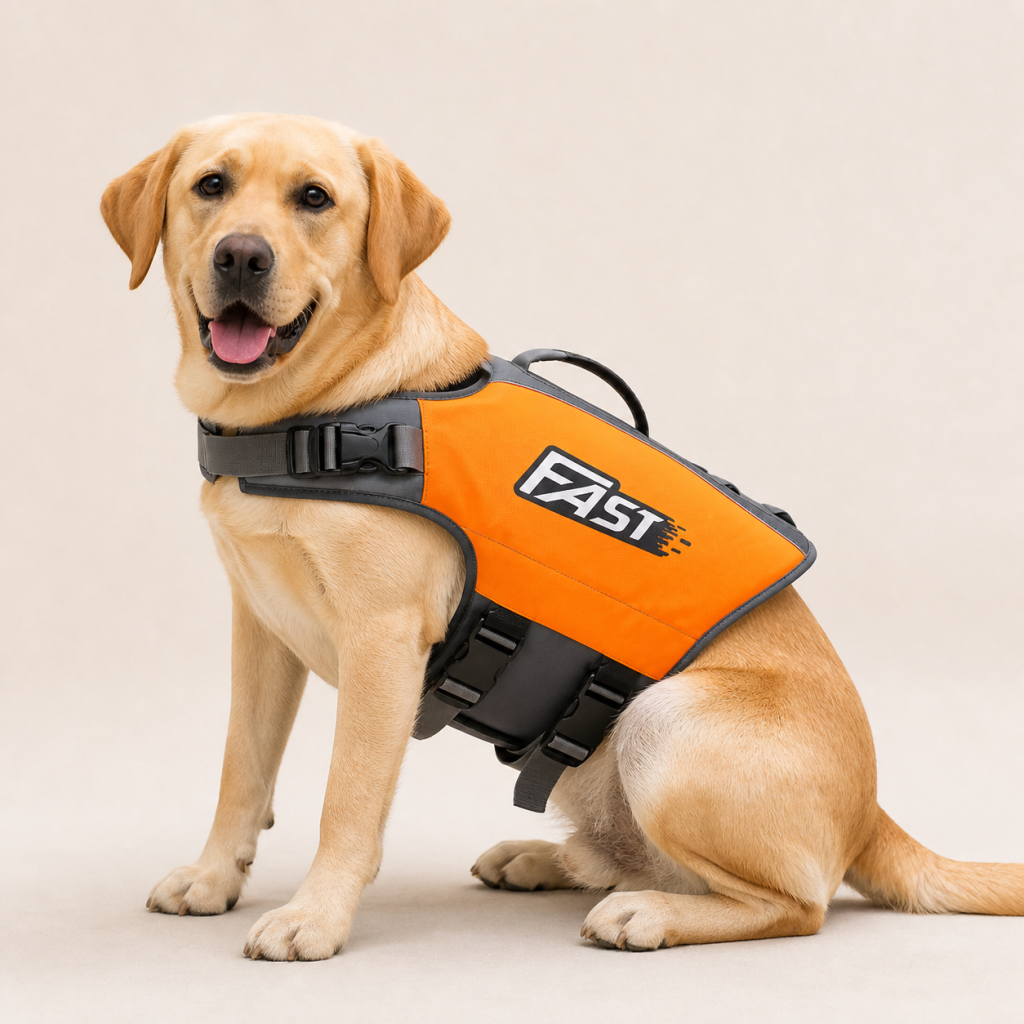
What is the difference between a dog swimsuit and a dog life jacket?
A dog swimsuit or rash guard is a close-fitting apparel layer. It can help reduce rubbing from sand, make rinsing easier after salt water, and add light coverage for sunny pool or beach days. It should fit close to the body without pulling under the front legs or limiting shoulder movement.
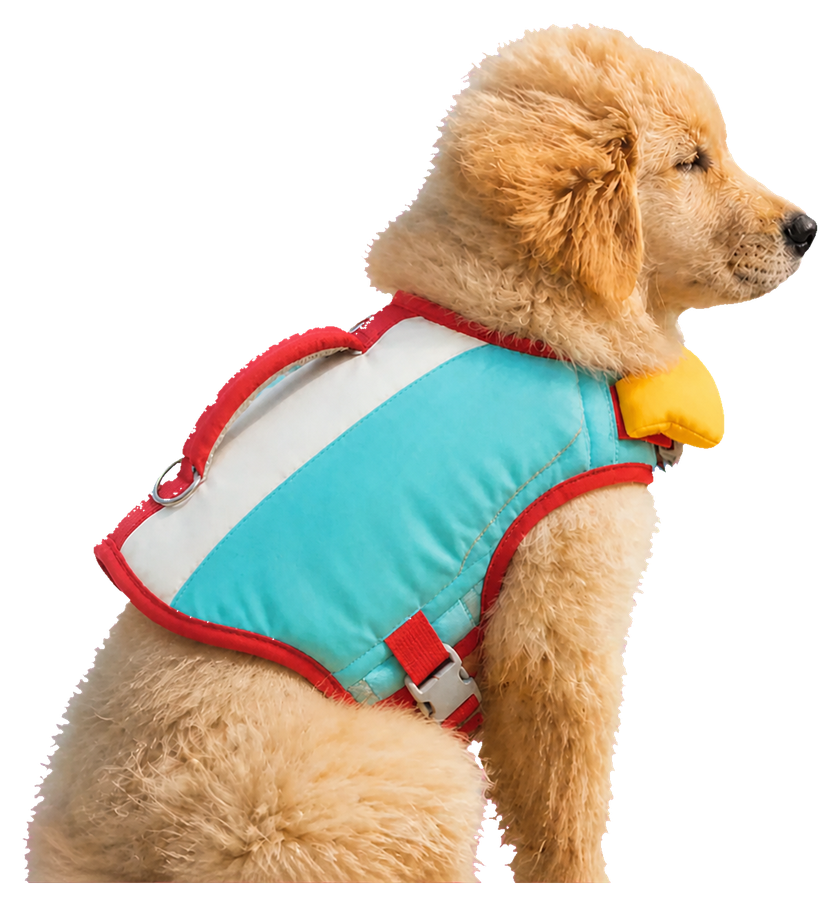
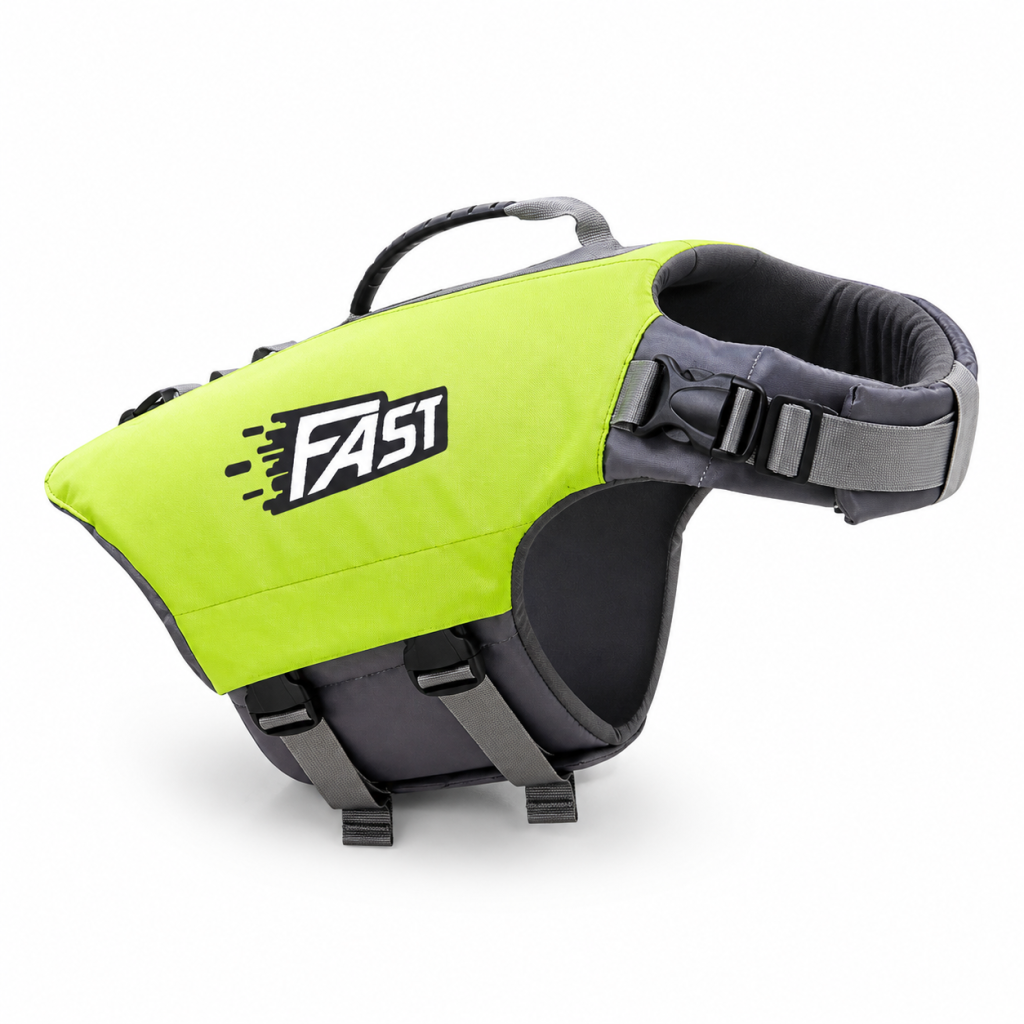
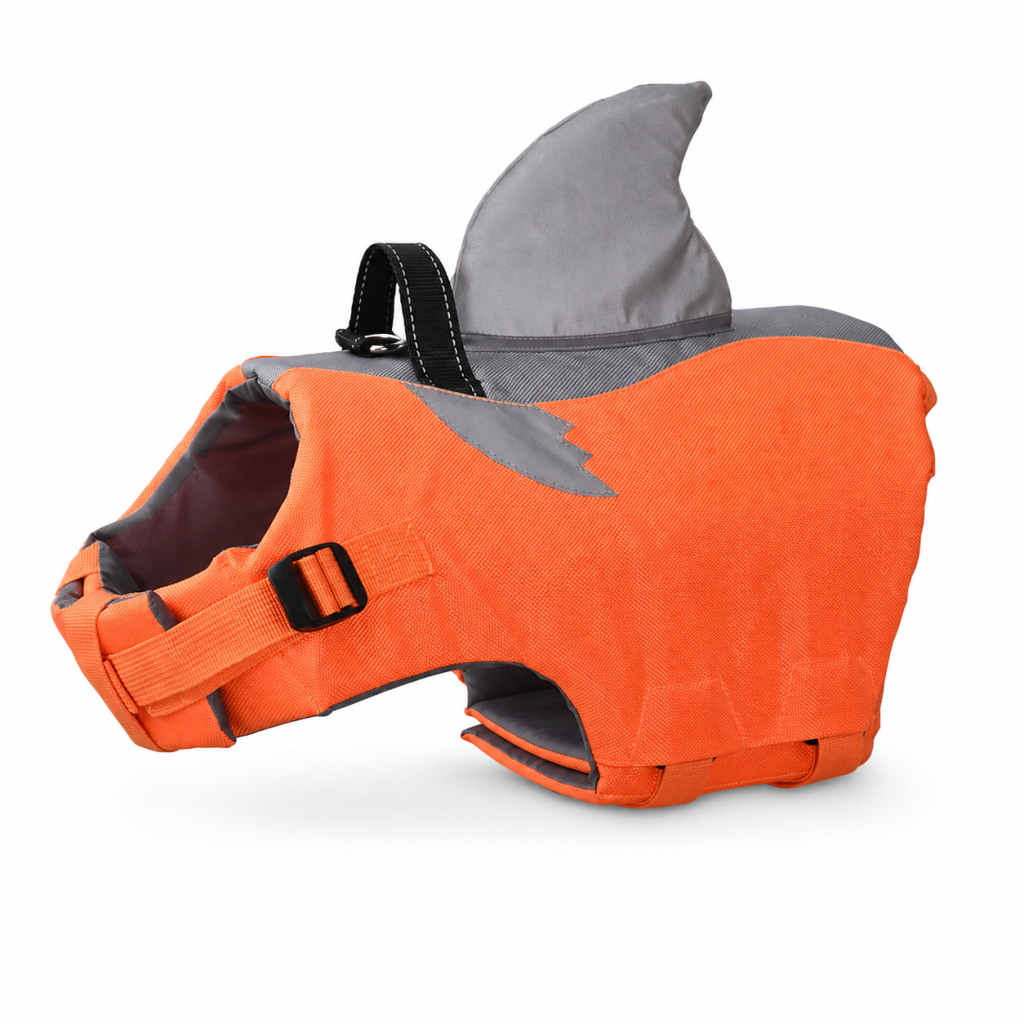
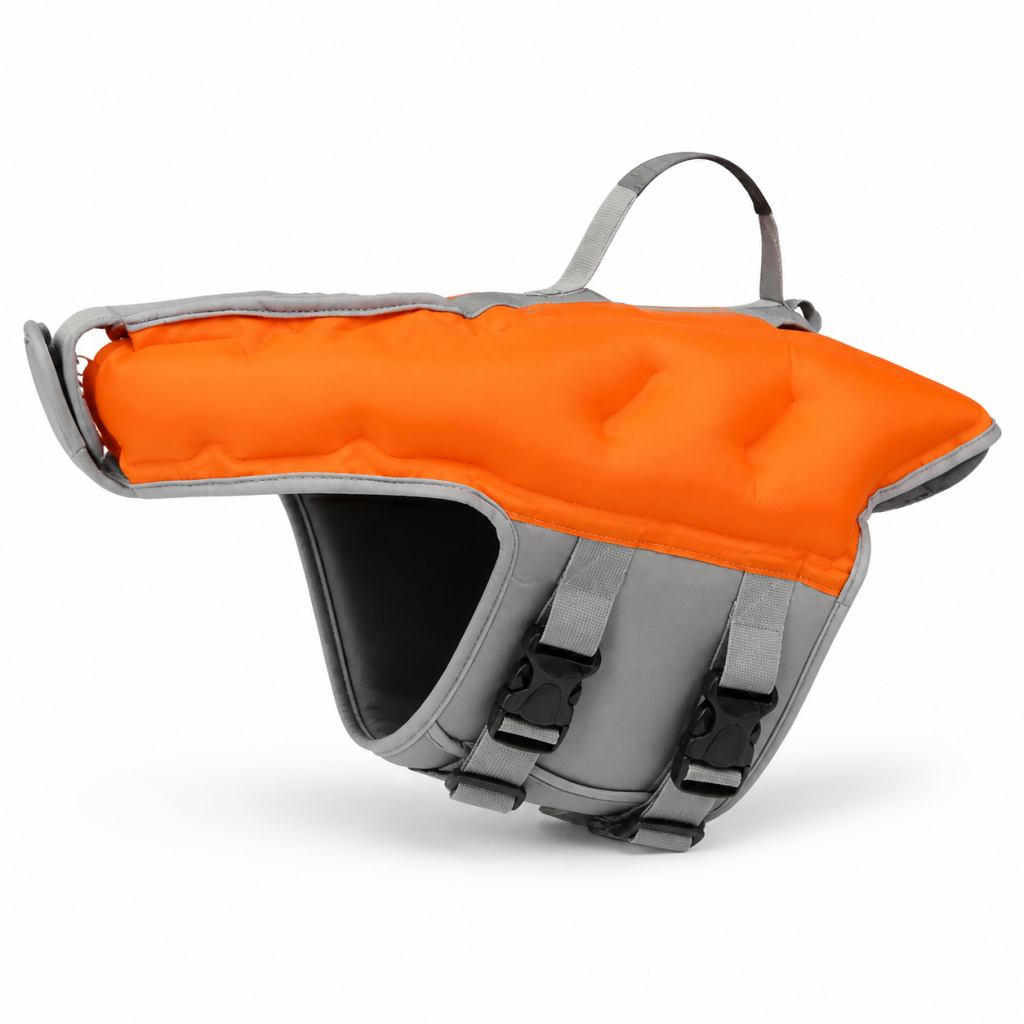
A dog life jacket is different. It is built around flotation panels, a more secure body fit, higher visibility, and usually a top handle. It is meant for supervised water situations where buoyancy support, quick grabbing, or easier spotting matters. It does not replace close supervision, but it is the safer choice when water depth, current, fatigue, boating, or uncertain swimming ability is part of the day.
Quick answer for shoppers
Choose a dog swimsuit when the main goal is coverage, comfort, quick drying, or a cleaner post-swim rinse. Choose a dog life jacket when the main goal is flotation support, visibility, or a safer handle point during supervised swimming. A swimsuit should feel like flexible clothing: snug, smooth, and easy to move in. A life jacket should feel secure around the chest and belly, with flotation panels sitting evenly and a handle positioned on top. For pool lounging, beach photos, and light splash play, swimwear may be enough. For boating, paddleboarding, docks, deep water, currents, tired swimmers, puppies, senior dogs, or dogs still learning to swim, use a properly fitted life jacket. Talenori treats swimwear as apparel and life jackets as safety-support gear; neither item removes the need for an attentive person nearby.
Dog swimsuit vs. dog life jacket comparison
| Question | Dog swimsuit or rash guard | Dog life jacket |
|---|---|---|
| Main purpose | Coverage, comfort, quick drying, and light sun-aware layering. | Buoyancy support, visibility, and controlled handling near water. |
| Best for | Pool decks, beach walks, photos, gentle splash play, and easy rinsing. | Boats, docks, paddleboards, lakes, deep pools, and less confident swimmers. |
| Fit priority | Chest girth first, then shoulder freedom and back length. | Chest security first, then even flotation, belly straps, and handle position. |
| Safety role | Apparel only; not flotation gear. | Buoyancy aid for supervised activity; not a substitute for supervision. |
| Talenori starting point | Laguna stretch dog swimsuit or Shoreline dog rash guard. | Harbor handle dog life jacket or the dog life jacket collection. |
When should you choose a dog swimsuit?
Choose a dog swimsuit when your dog is already comfortable around shallow water and the main problem is coverage rather than flotation. Swimwear can be useful for short beach walks, splash pads, supervised poolside time, and dogs who benefit from a smooth barrier between coat, sand, and sun. It can also make the end of the day easier because a fitted layer catches some sand and rinses faster than a full coat.
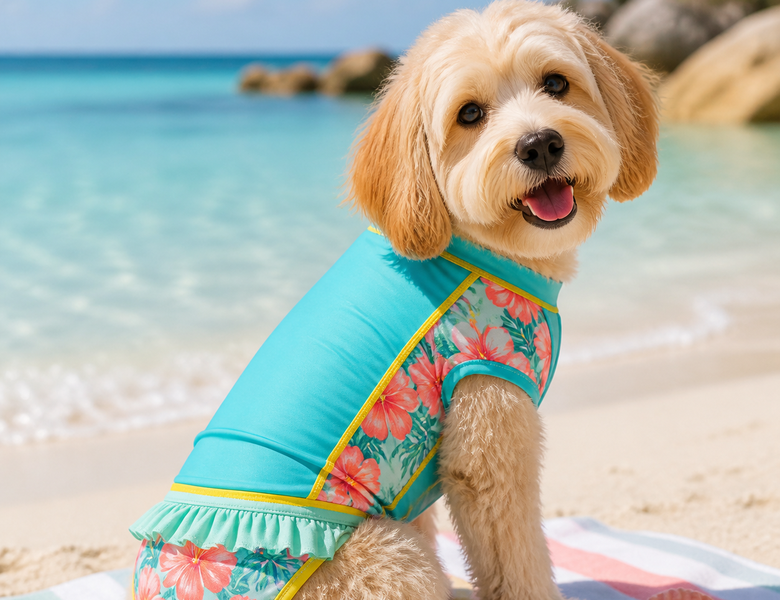
The fit should be close but not tight. Check the front legs, chest, neck opening, and back length while your dog is standing and walking. If fabric pulls behind the shoulders, twists around the chest, or changes your dog’s stride, the size is not right. Use the dog swimwear size guide before checkout, and measure again if your dog is between sizes.
When should you choose a dog life jacket?
Choose a dog life jacket when water risk is higher or your dog needs more support. That includes boating, paddleboarding, docks, deep water, cold water, currents, crowded beaches, puppies, senior dogs, short-legged breeds, heavy-coated dogs, and dogs still learning how to swim. A life jacket should stay centered on the body and should not slide forward into the neck or rotate around the rib cage.
The top handle is for quick assistance, not constant lifting. If you need to guide your dog from a dock, pool edge, or boat platform, keep one hand close and use the handle carefully. After salt water or chlorine, rinse the jacket, check straps for sand, and let the panels dry fully before storage. Talenori’s water safety guide has a fuller pre-swim checklist, and the dog life jacket mistakes guide covers common fit and safety errors to avoid.
For broader warm-weather planning, the American Veterinary Medical Association recommends preparing for heat risks before outings. Bring fresh water, watch for fatigue, and avoid assuming that confidence on land means a dog can safely handle every water setting.
How should each item fit?
- For swimsuits and rash guards: measure chest girth first, then check back length and neck opening. Your dog should be able to walk, sit, turn, and breathe normally.
- For life jackets: follow the product’s chest and weight guidance, then check that flotation panels sit evenly and straps do not dig into the belly or shoulders.
- For both: do a dry indoor fit check before the first swim. A clean, dry try-on keeps exchanges simpler if the size is not right.
If you are choosing between two sizes, start with the chest measurement. Deep-chested dogs may need extra room, while narrow dogs may need a more secure adjustment. For a detailed measuring routine, read how to measure your dog for a rash guard, or use the shorter measuring checklist before placing an order.
For life jacket sizing specifically, use the companion guide how should a dog life jacket fit, which covers chest straps, shoulder freedom, top handle position, and the first shallow-water float check.
Can a dog wear both?
Sometimes, yes. A thin rash guard can sit under a life jacket if it does not bunch, wrinkle, or block the jacket’s straps. This setup can help with light coverage during long outdoor days, but the final fit must still be checked as one system. For the full layered-fit routine, read can a dog wear a rash guard under a life jacket. If the life jacket shifts, rides up, or becomes harder to buckle over the swim layer, use the life jacket by itself.
Bottom line
Use a dog swimsuit for coverage and comfort. Use a dog life jacket for flotation support and visibility. If the outing involves deep water, a boat, a dock, a current, a tired swimmer, or uncertainty, choose the life jacket first. Then add swimwear only when it improves comfort without interfering with the jacket’s secure fit.
Last updated: September 14, 2026. Written by Talenori for dog waterwear shoppers comparing swim apparel and supervised water-safety gear.