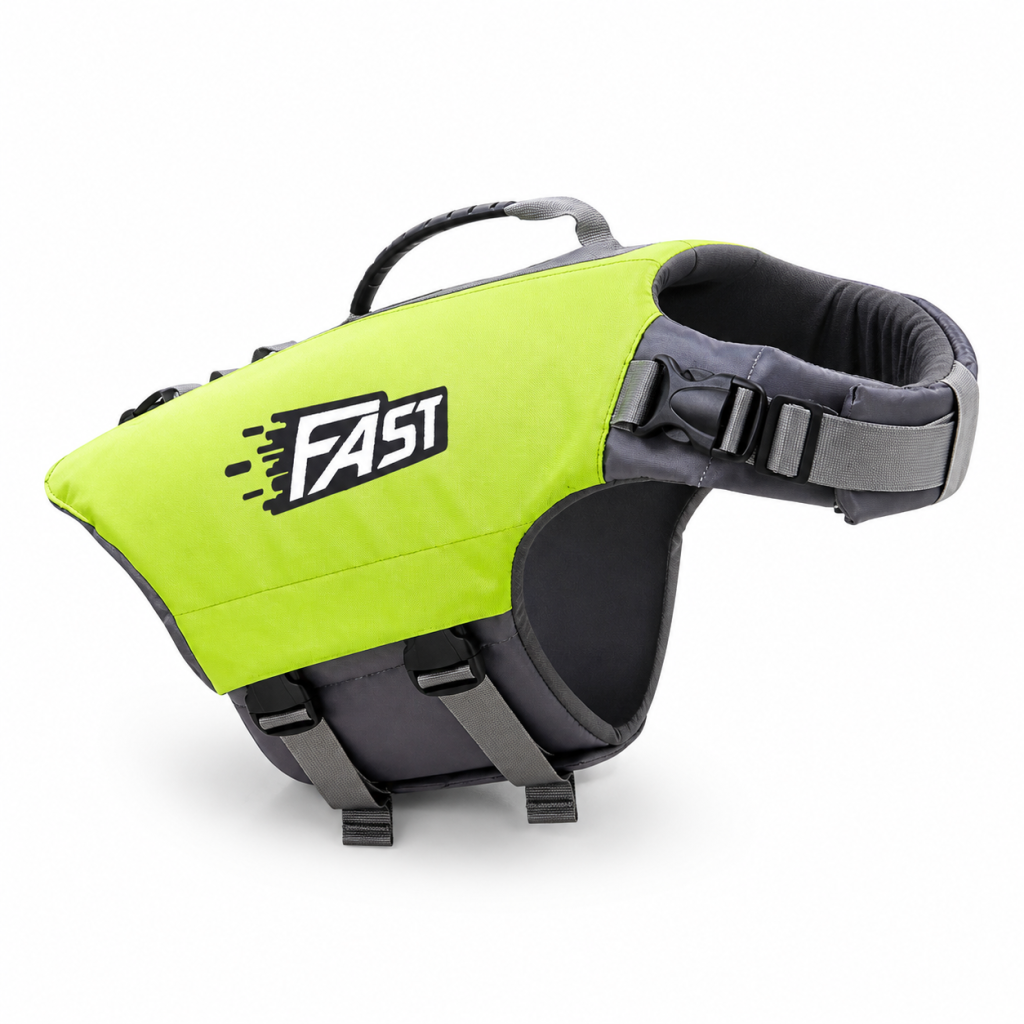
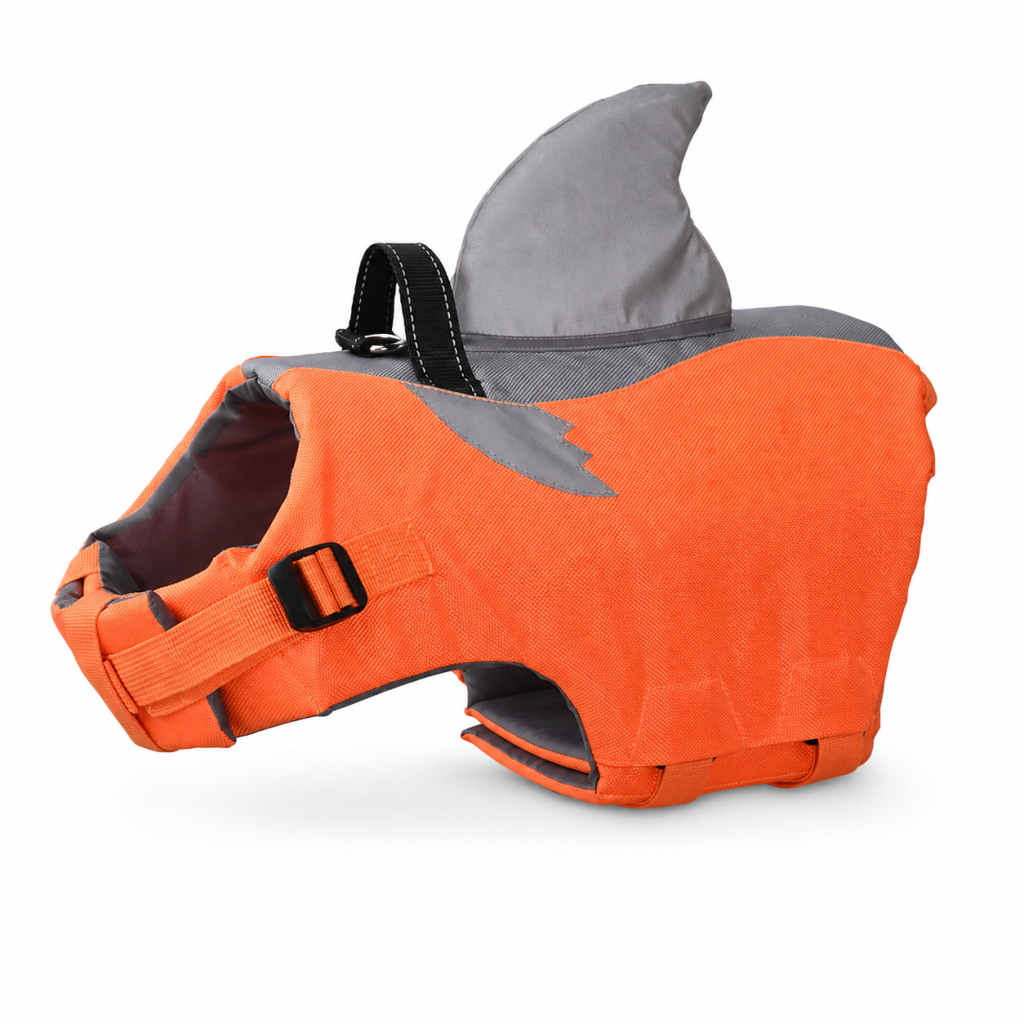
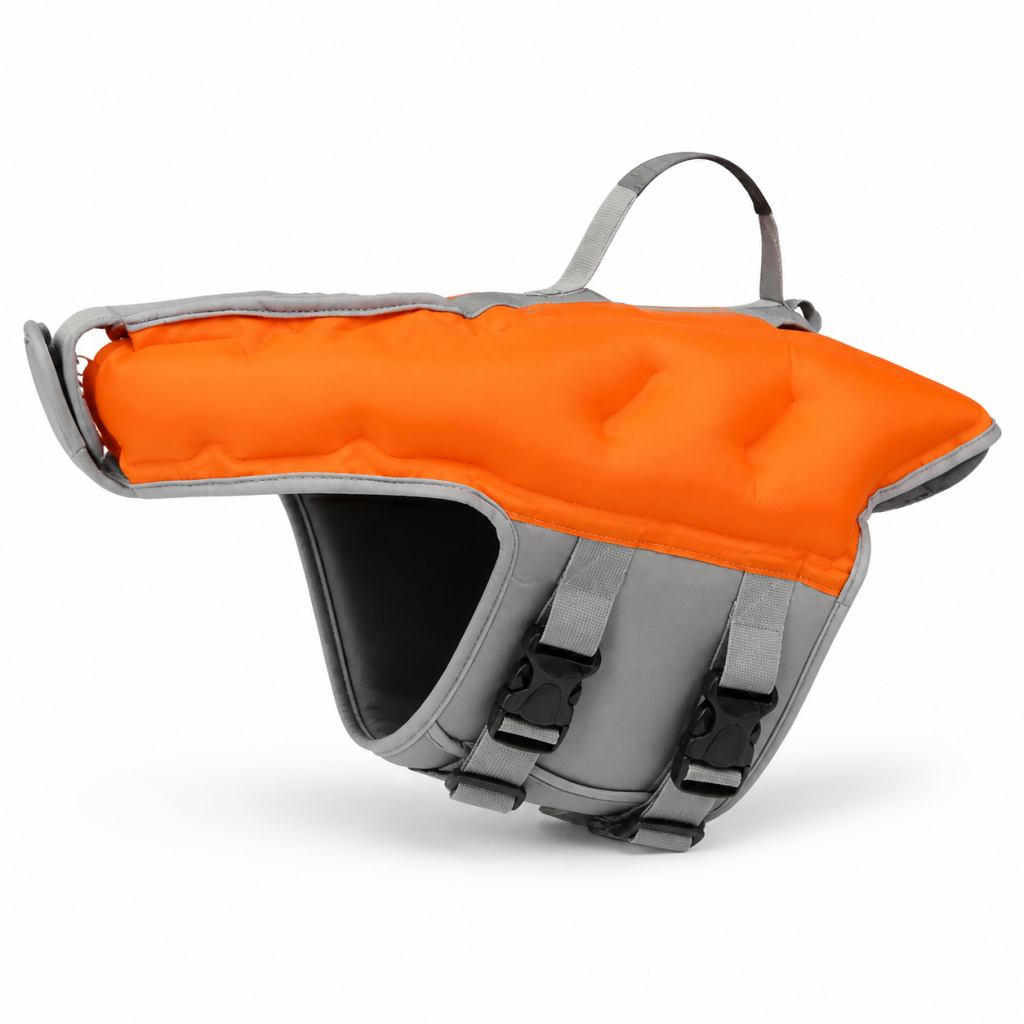
The most common dog life jacket mistakes are choosing by weight alone, leaving the straps too loose, blocking shoulder movement, skipping the first shallow-water test, and using a jacket as a substitute for supervision. A good dog life jacket should fit around the chest and belly, stay centered when wet, leave the front legs free, and let the neck sit comfortably below the throat. Before any boat, dock, pool, lake, or paddleboard outing, check the size indoors, tighten the belly straps evenly, look for rubbing behind the front legs, and test the jacket in calm shallow water. If the jacket rolls, slides forward, lifts away from the ribs, presses into the throat, or makes your dog change stride, fix the fit before continuing.
What are the biggest dog life jacket mistakes?
The biggest mistakes happen before the dog reaches the water. Shoppers often choose a jacket by breed, weight, or color first, then discover that the chest fit is unstable. Others fasten the jacket loosely because they want it to feel comfortable, but a loose jacket can rotate, slide forward, or lift when the dog moves.
A dog life jacket is buoyancy-support gear for supervised water activity. It needs to fit like working equipment, not like loose clothing. The American Kennel Club advises that a dog life jacket should fit snugly without restricting movement, and that dogs should be introduced to the jacket before a bigger water outing.
Quick answer for shoppers
Avoid dog life jacket mistakes by measuring chest girth first, checking shoulder movement, fastening straps flat, and doing a dry indoor fit check before water. The jacket should not press into the throat, block the front legs, hang loose under the belly, or rotate around the ribs. After the dry check, test the jacket in calm shallow water where your dog can exit easily. Watch whether the jacket stays level when wet and whether your dog paddles, stands, and turns normally. Do not rely on the top handle for casual lifting, and do not treat any life jacket as a replacement for close supervision. If your dog is tired, cold, stressed, overheated, or swimming in current, end the session early.
Dog life jacket mistakes checklist
| Mistake | Why it matters | Better check |
|---|---|---|
| Choosing by weight only | Weight does not show chest depth, rib shape, or shoulder width. | Measure chest girth, then confirm back length and neck comfort. |
| Leaving straps loose | A loose jacket can rotate, slide forward, or pull under the belly. | Use a snug two-finger strap check after fastening. |
| Blocking shoulders | Restricted front legs make paddling harder and can cause stress. | Ask your dog to walk, sit, turn, and step forward indoors. |
| Skipping wet fit | Fabric and straps can settle differently once wet. | Do a short shallow-water test before deep water. |
| Overusing the handle | The handle is for brief help, not casual carrying. | Use it only for controlled assistance near exits or platforms. |
| Assuming supervision is optional | A life jacket supports buoyancy, but it cannot manage fatigue, current, heat, or panic. | Stay close and end the outing at the first safety concern. |
Mistake 1: Choosing by breed or weight alone
Breed and weight can help you narrow options, but they should not decide the final size. Two dogs with the same weight can have very different rib cages, neck openings, shoulder angles, and body lengths. A jacket that works for one dog may slide or rub on another.
Start with chest girth, measured around the widest part of the rib cage just behind the front legs. Then check body length and neck comfort. If your dog falls between two sizes, the dry fit check matters more than the label. For the full measuring routine, use Talenori’s guide to how a dog life jacket should fit.
Mistake 2: Letting the jacket ride into the neck
The front edge of the life jacket should sit below the throat. If it pushes into the neck when your dog sits, lowers the head, or steps forward, the jacket can become uncomfortable quickly. Neck pressure can also make a dog resist the jacket before the water outing even starts.
PetMD notes that a dog life jacket should allow full shoulder movement and avoid neck or throat pressure. Treat that as a hard fit rule. If the jacket sits too high at the front, adjust placement, recheck the straps, or choose a different size or shape.
Mistake 3: Skipping the dry fit check
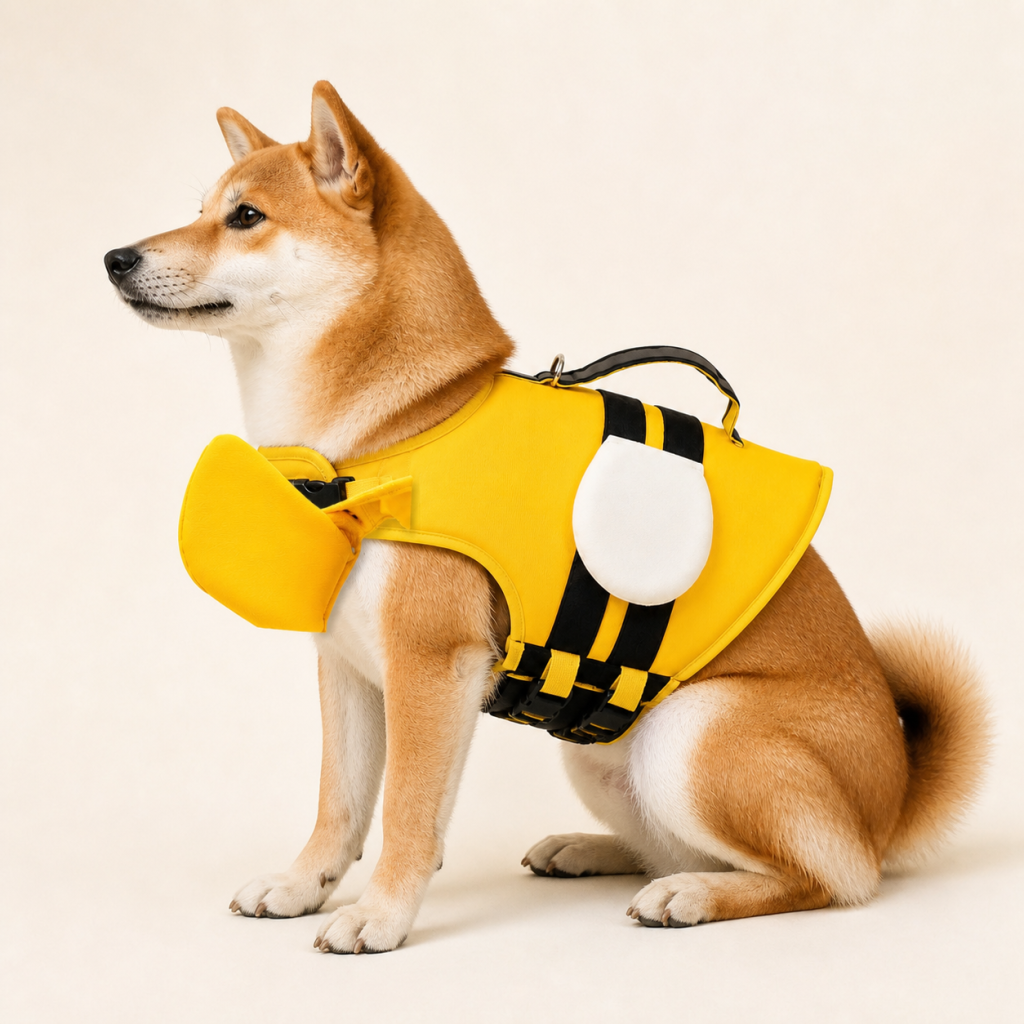
A dry fit check is the easiest way to catch problems before your dog is wet, excited, or distracted. Put the jacket on indoors while it is clean and dry. Ask your dog to stand, walk, sit, turn, lower the head, and take a few normal steps. Watch the shoulders, belly straps, and front opening.
If your dog freezes, changes stride, paws at the jacket, or cannot sit comfortably, pause before using it in water. A clean indoor try-on also keeps size exchanges simpler if the jacket does not match your dog’s build.
Mistake 4: Forgetting the first shallow-water test
A life jacket can look stable indoors and still shift once wet. Start in calm shallow water where your dog can stand or exit easily. Keep the first test short. Watch whether the flotation panels stay balanced, whether the jacket rotates, and whether the front legs move freely.
If the jacket rolls to one side, slides forward, or makes your dog paddle unevenly, stop and adjust it on land. A shallow-water test is especially important before boating, docks, paddleboards, deep pools, or lakes with wind and current.
Mistake 5: Using the handle the wrong way
The top handle is helpful for brief, controlled assistance near a dock, pool edge, boat platform, or shallow-water exit. It is not meant for swinging, casual carrying, or repeatedly lifting a dog when the jacket fit is unstable. If the handle pulls the jacket forward, the fit is not ready.
Before using the handle around water, gently steady the jacket indoors and check whether the body panel stays centered. If the handle moves only the fabric instead of the jacket staying secure around the rib cage, adjust the fit or choose another jacket.
Mistake 6: Treating a life jacket as supervision
A dog life jacket supports buoyancy, visibility, and handling, but it does not replace an attentive person nearby. Dogs can still become tired, cold, overheated, startled, tangled, or pushed by current. Puppies, senior dogs, short-legged dogs, thick-coated dogs, and uncertain swimmers need extra caution.
For broader warm-weather planning, the American Veterinary Medical Association recommends preparing for heat risk, fresh water, shade, and signs of distress during outdoor activity. For water-specific planning, keep Talenori’s water safety guide nearby.
Mistake 7: Layering without rechecking the jacket
If your dog wears a rash guard or thin swim layer under a life jacket, the final fit changes. Fabric can add bulk under straps, wrinkle near the shoulders, or make the neck opening feel tighter. The life jacket must still be the outer controlling fit layer.
Layer only when the underlayer is thin and smooth. Recheck the dry fit and shallow-water fit as one system. If layering creates bunching, strap pressure, or shoulder restriction, remove the rash guard and use the life jacket by itself. For the complete layering routine, read can a dog wear a rash guard under a life jacket.
Which Talenori life jacket should you compare?
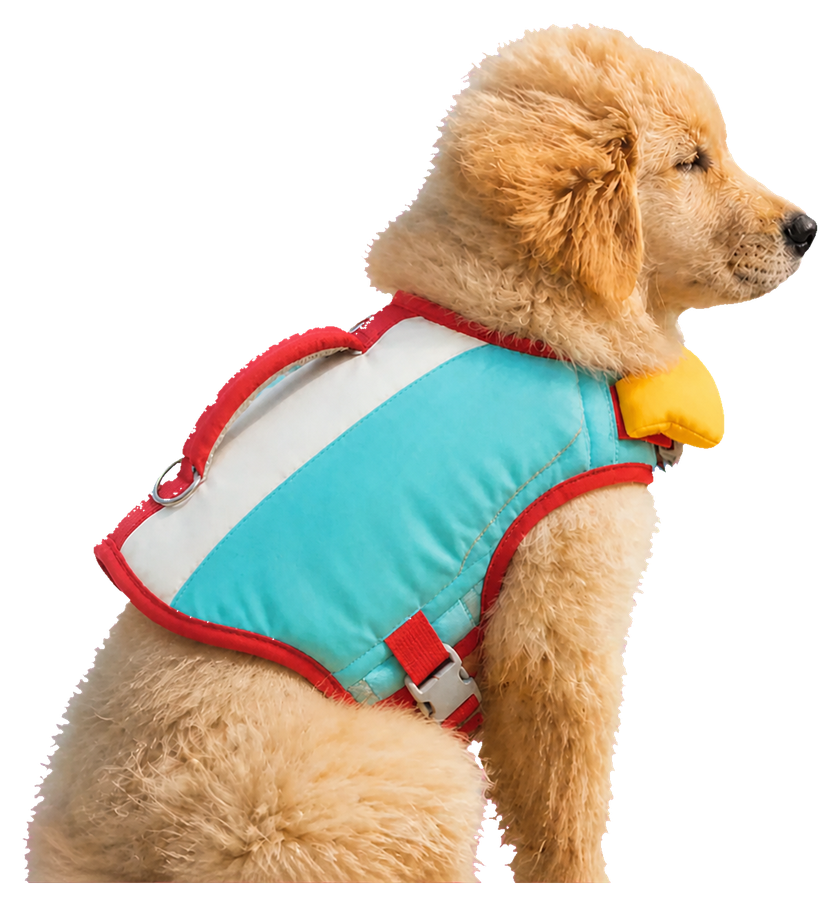
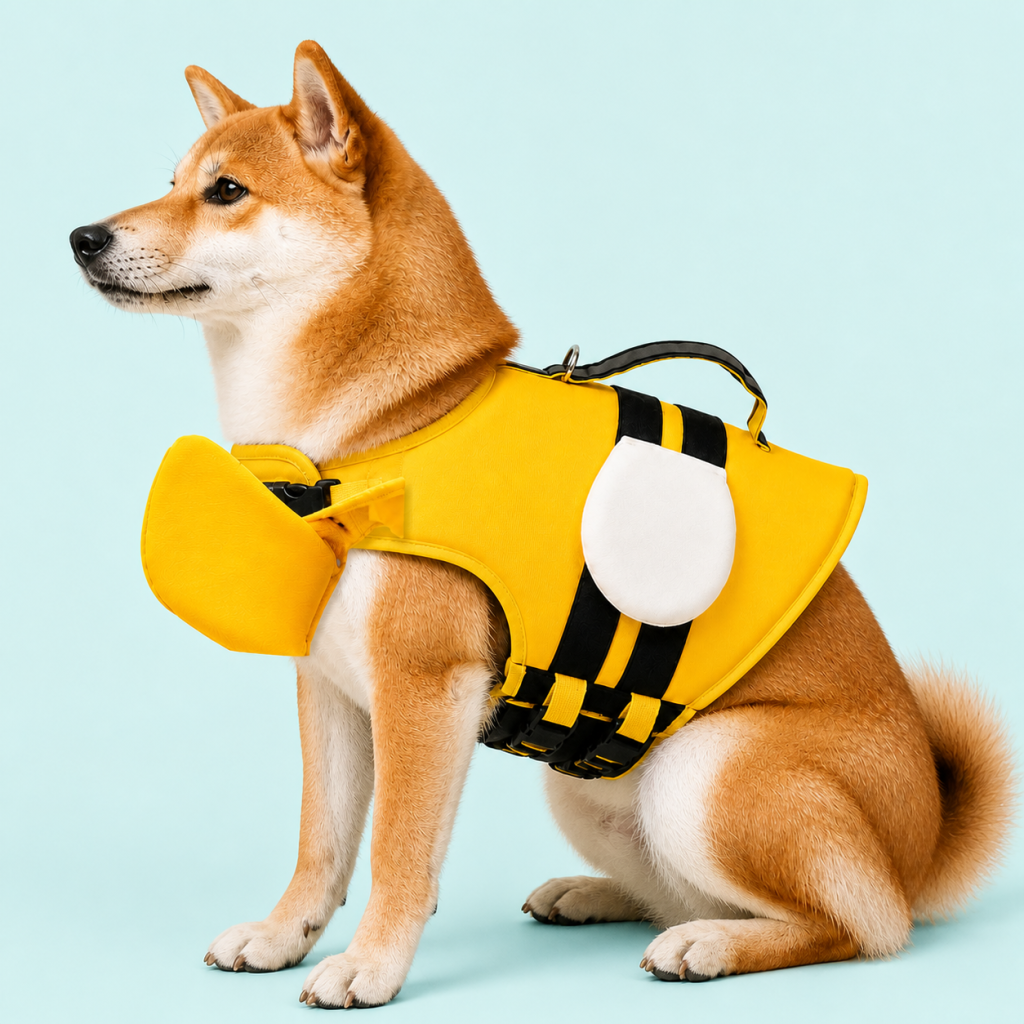
For a playful visible style, shoppers can compare the Yellow Bee Dog Life Jacket shown here. If your dog needs a different silhouette, color, or strap layout, browse the full dog life jacket collection. If you are still deciding whether your dog needs apparel coverage or buoyancy support, start with dog swimsuit vs. dog life jacket.
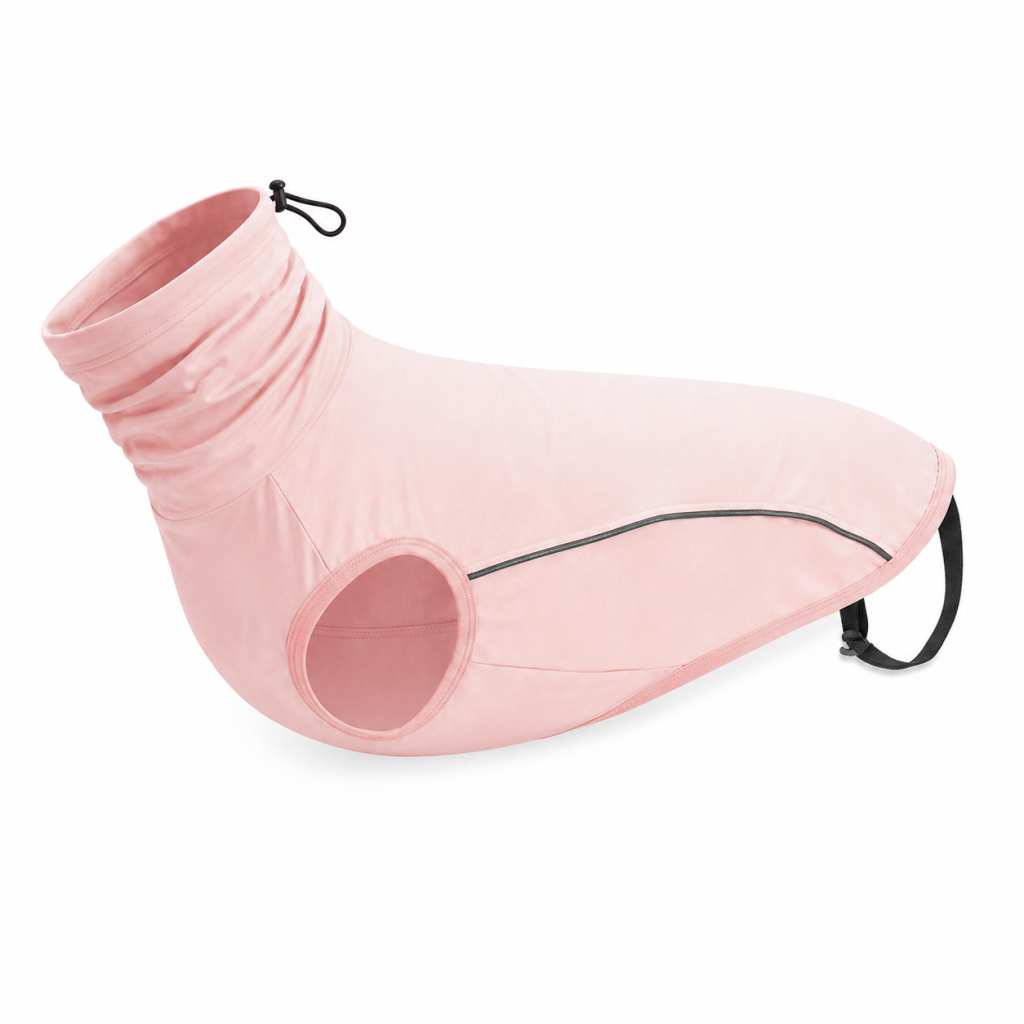
If your dog needs fitted sun or splash coverage instead of buoyancy support, measure separately for a rash guard. Talenori’s guide on how to measure your dog for a rash guard explains chest girth, back length, neck opening, and dry fit checks for apparel-style waterwear.
Bottom line
Avoid dog life jacket mistakes by measuring chest girth first, fitting the jacket snugly without blocking movement, checking the neck and shoulders, and doing a short shallow-water test before higher-risk outings. The best jacket is the one that stays centered, lets your dog move naturally, and supports supervised water activity without creating new fit problems.
Last updated: September 16, 2026. Written by Talenori for dog waterwear shoppers comparing life jacket fit, sizing mistakes, water-day safety, and supervised swimming gear.