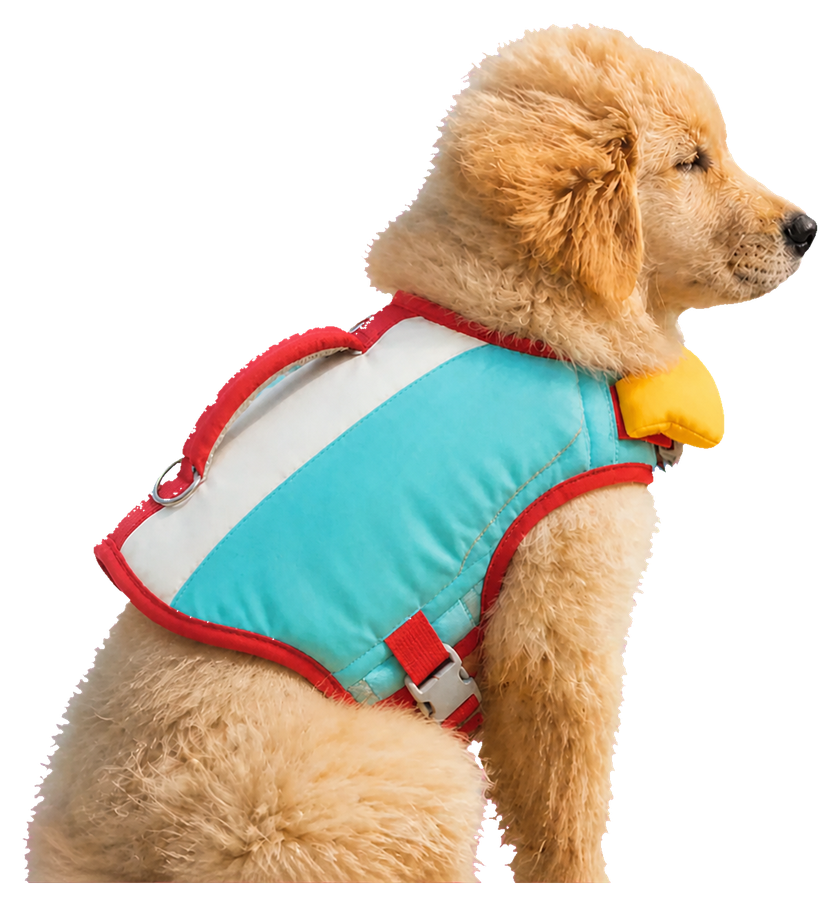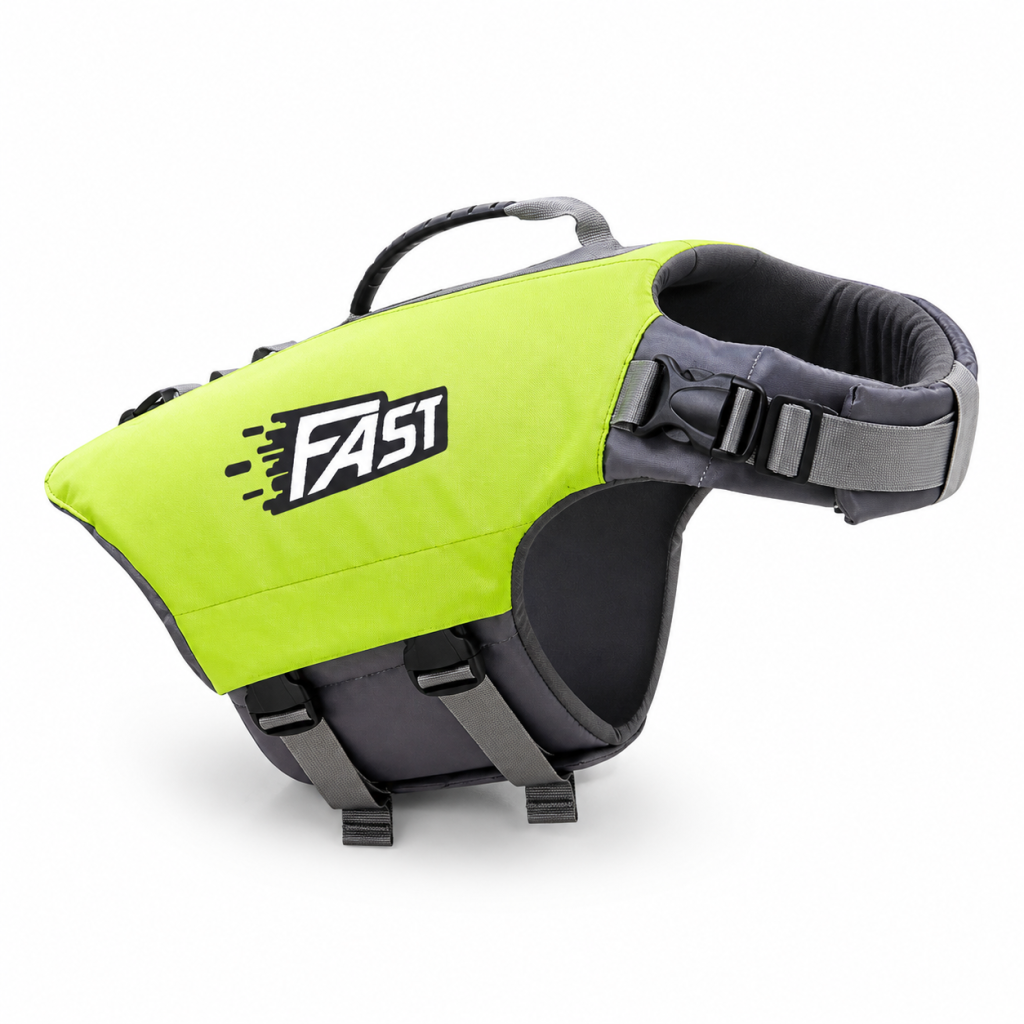
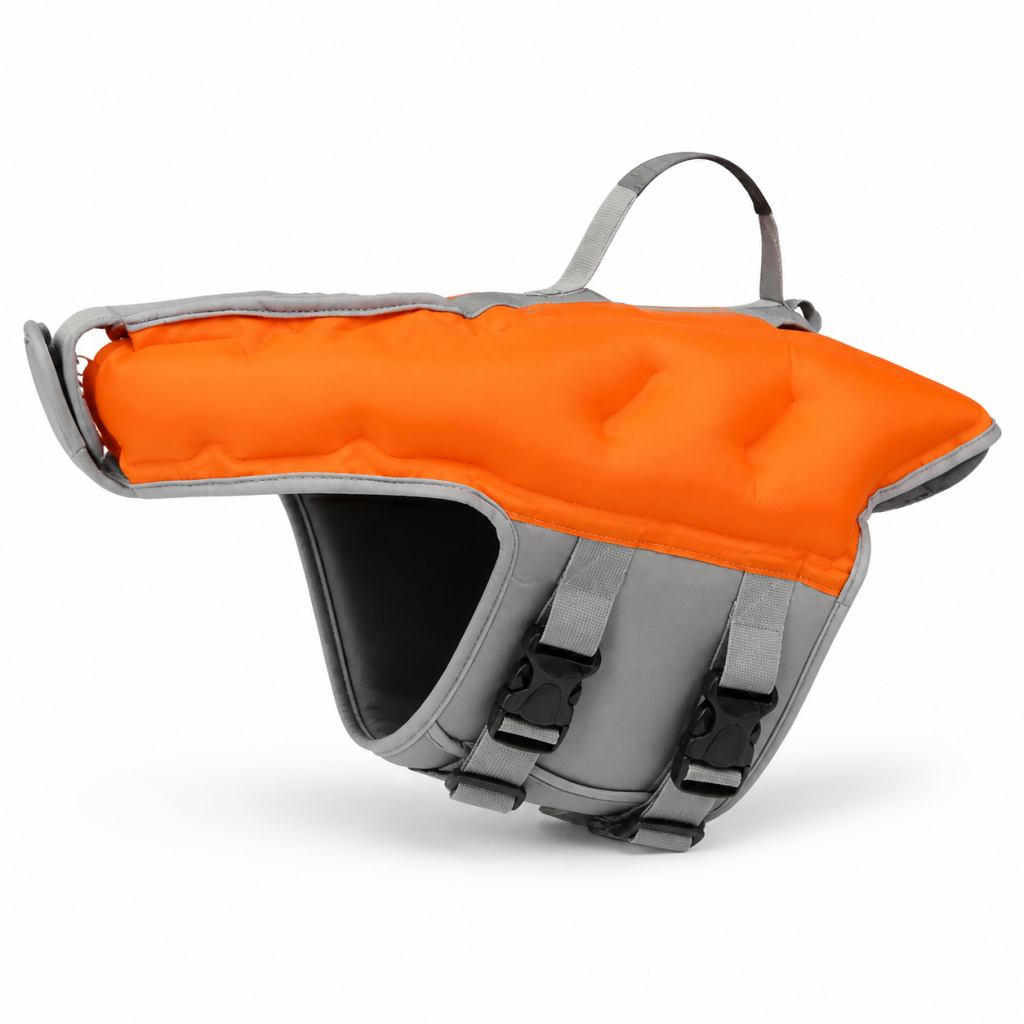
A dog life jacket should fit snugly around the chest and belly without pressing into the neck, shoulders, or front legs. Start with chest girth, then check body length, weight guidance, strap adjustment, and whether the flotation panels sit evenly on both sides. When your dog stands, walks, sits, and turns, the jacket should stay centered instead of rotating, sliding forward, or lifting away from the ribs. You should be able to fit about two fingers under the straps, but the jacket should not shift when you gently hold the top handle. Before deep water, do a dry indoor fit check and then a supervised shallow-water float check. If your dog changes stride, pants harder, cannot sit, or the jacket rubs behind the front legs, loosen, resize, or choose a different shape.
What does a properly fitted dog life jacket look like?
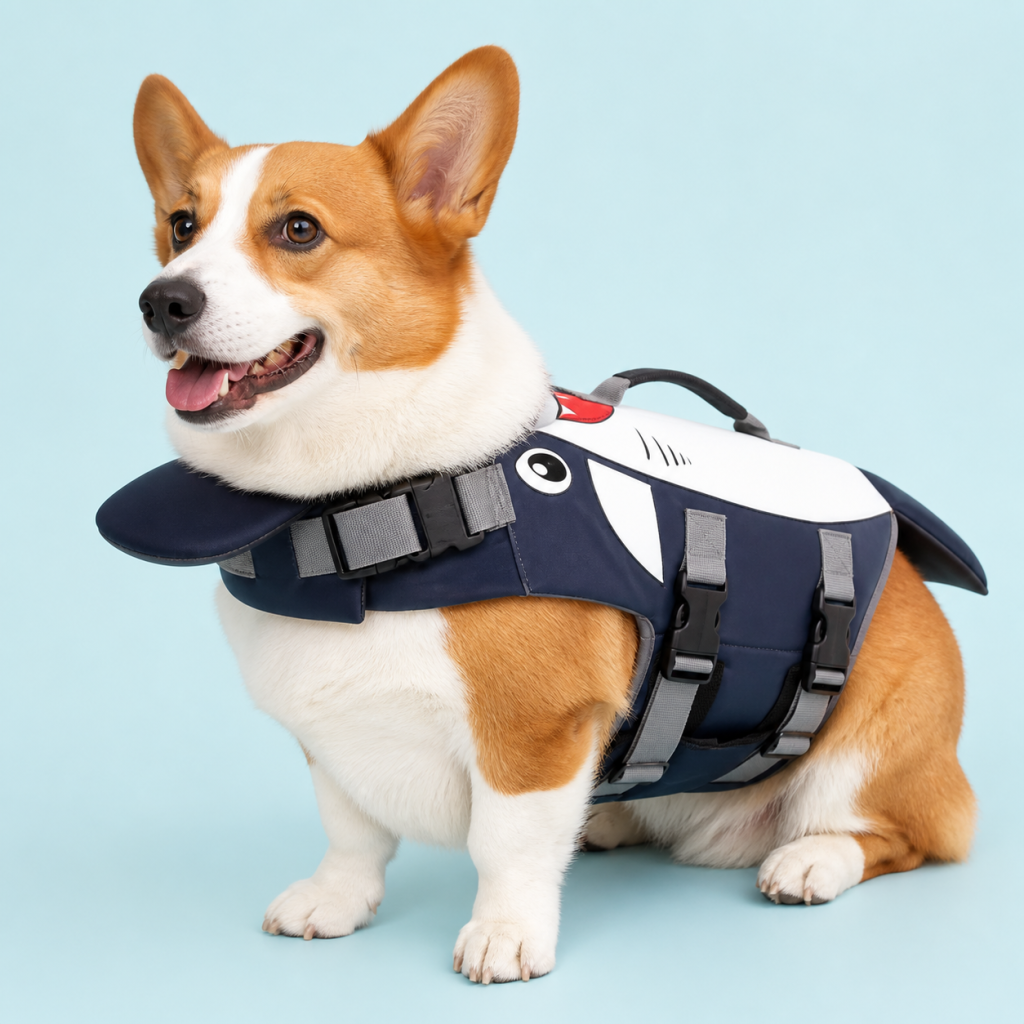
A properly fitted dog life jacket looks secure but not forced. The jacket should follow the shape of your dog’s rib cage, leave the front legs free, and keep flotation panels balanced instead of bunched on one side. The top handle should sit on the back where you can steady your dog briefly, not so far forward that it pulls the jacket into the neck.
Think of fit as a system: chest security, shoulder freedom, belly comfort, panel balance, and a calm first water test. The American Kennel Club notes that a dog life jacket should be snug without restricting movement and that a shallow-water float test can reveal buoyancy, motion, and wet fit issues before a bigger outing.
Dog life jacket fit checklist
| Fit point | What to check | Warning sign |
|---|---|---|
| Chest girth | The main body wraps close around the rib cage and buckles without forcing. | The jacket rotates, gaps, or cannot buckle without squeezing. |
| Neck opening | The front edge sits below the throat and does not push into the windpipe. | The jacket rides up when your dog sits or lowers the head. |
| Shoulders | Front legs can step forward normally, with no strap rubbing behind the armpits. | Your dog shortens stride, stiffens, or paws at the jacket. |
| Belly straps | Straps lie flat, with room for normal breathing and a two-finger check. | Straps twist, dig in, or hang low enough to snag. |
| Flotation panels | Panels sit evenly on both sides and stay level when wet. | One side floats higher, or the jacket rolls around the body. |
| Top handle | The handle sits on top for quick steadying during supervised help. | The handle pulls the jacket forward or lifts only fabric, not the dog securely. |
Which measurement matters most?
Chest girth matters first because the life jacket has to stay secure around the widest working part of the body. Measure around the rib cage behind the front legs while your dog is standing. Then compare body length, neck comfort, and product weight guidance. If your dog is deep-chested, narrow, long-backed, or between sizes, the chest measurement should still guide the first size choice, but the dry fit check decides whether that size really works.
The Ontario SPCA recommends considering chest circumference and torso length, then checking that the life jacket is snug while still allowing comfortable movement. For Talenori shoppers, use the dog swimwear size guide and product page measurements together rather than relying on breed alone.
How tight should the straps be?
The straps should be flat and close enough that the life jacket stays centered when your dog walks, but loose enough for normal breathing, sitting, and shoulder movement. A practical check is to slide two fingers under the strap after fastening. If you cannot fit your fingers under the strap, it is too tight. If you can lift the jacket far away from the ribs or rotate it with light pressure, it is too loose.
Check straps after a few minutes of movement. Dogs often shake, stretch, or sit after first wearing a jacket, and that can reveal twisting or rubbing you do not see during the first buckle. Recheck again when the jacket is wet because fabric, foam, and straps can settle differently in water.
Where should flotation panels and the handle sit?
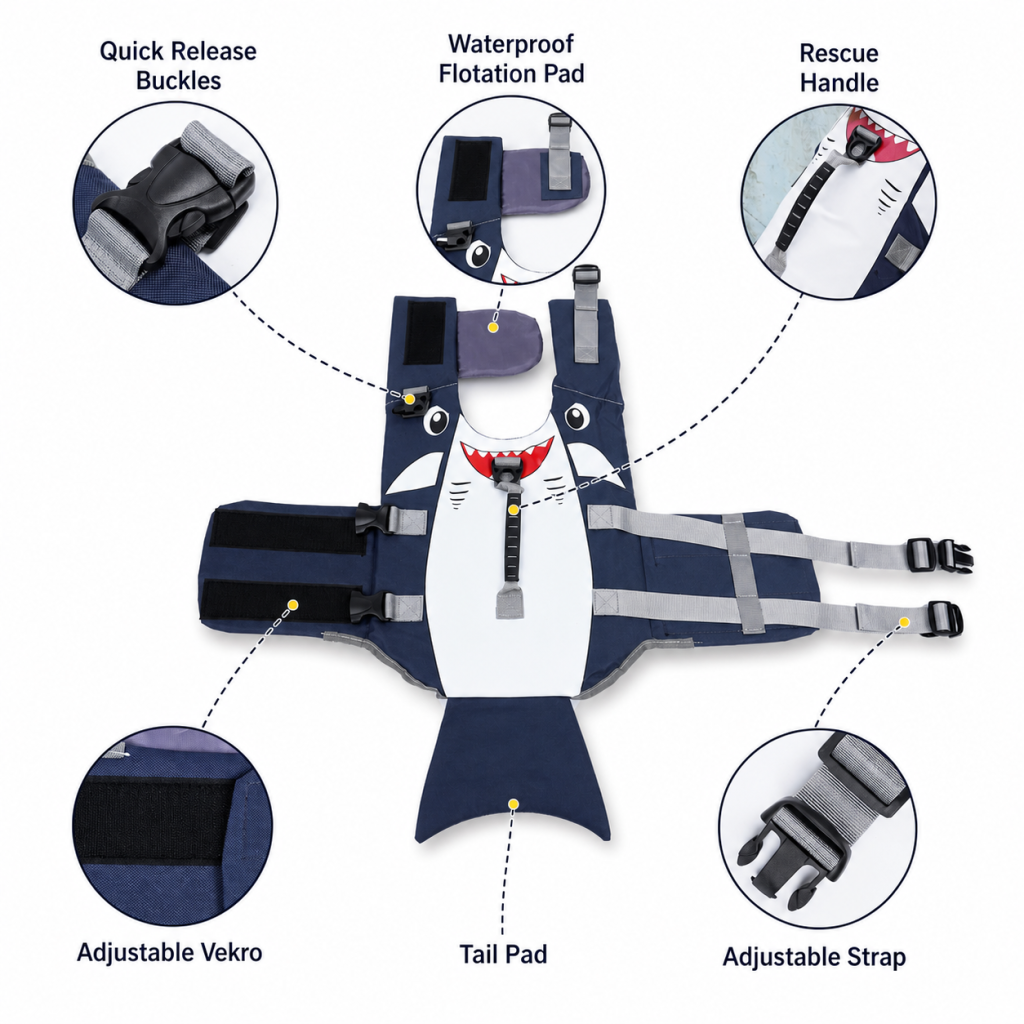
Flotation panels should sit evenly along the body so the jacket supports the dog without tipping them to one side. Side panels should not bunch behind the front legs, and any neck support should help keep the head clear without forcing the chin upward. The handle should sit along the top line, close enough to control the dog briefly during supervised assistance.
The handle is not meant for carrying a dog around casually. Use it for short, controlled assistance near a dock, pool edge, boat platform, or shallow water entry. If the handle makes the jacket slide forward, the fit or size is not stable enough yet.
How do you do a dry fit check?
- Let your dog sniff the jacket before fastening it.
- Place it on the back and align the front opening below the throat.
- Buckle the chest and belly straps, then flatten any twists.
- Ask your dog to stand, walk, sit, turn, and lower the head.
- Check two-finger strap room, shoulder freedom, and whether the jacket stays centered.
A dry fit check should happen before the first water outing. This protects your dog from discomfort and keeps the product cleaner if you need to exchange sizes. If you are deciding between swim apparel and buoyancy gear, read dog swimsuit vs. dog life jacket first; fitted swimwear is apparel, while a dog life jacket is buoyancy-support gear for supervised water activity.
How do you do the first water test?
Start in calm, shallow water where your dog can touch or exit easily. Keep a hand close, use a leash or controlled entry when appropriate, and watch whether the jacket stays level once wet. Look for rolling, slipping, blocked front-leg motion, or panic. A short first session is enough; the goal is to confirm comfort, flotation balance, and your dog’s response before any deeper water, boat, dock, or paddleboard situation.
For broader outing planning, use Talenori’s water safety guide. Bring fresh water, watch for heat and fatigue, rinse gear after salt or chlorine, and remember that no life jacket replaces close supervision.
Common fit problems and quick fixes
- The jacket slides forward: loosen the neck area if it is pulling, then tighten chest and belly straps evenly. If it still slides, size or body shape may be wrong.
- The jacket rotates: chest girth may be too loose, or flotation panels may not match your dog’s build.
- Your dog cannot sit: the jacket may be too long, too tight through the belly, or placed too far back.
- Front-leg movement changes: check for rubbing behind the shoulders and confirm the front opening is not too low.
- The handle feels unstable: stop using it for assistance until the jacket stays centered under light pressure.
Which Talenori dog life jacket should you start with?
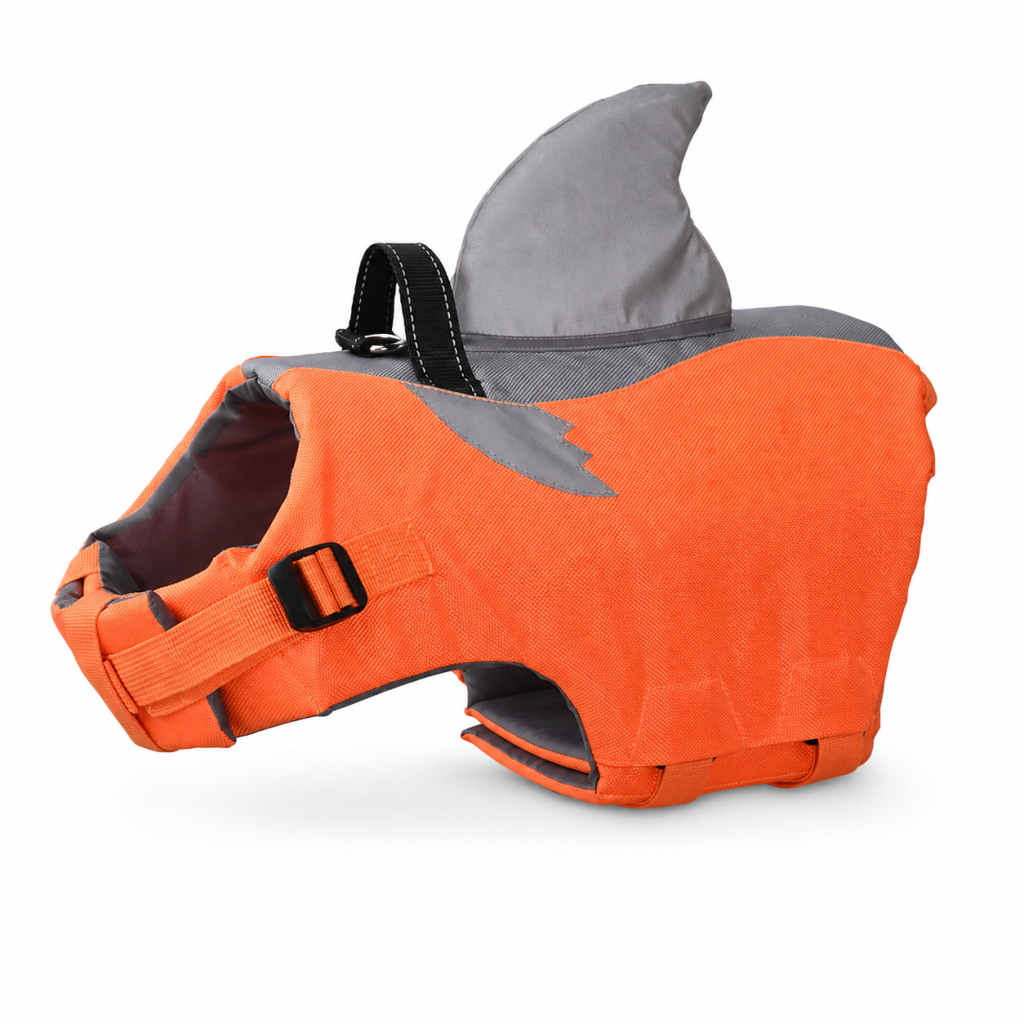
For shoppers comparing styles, the Shark-Style Dog Life Jacket with Easy-Move Fit is a good starting point when you want visible side panels, adjustable straps, and a top handle. You can also browse the full dog life jacket collection if your dog needs a different silhouette, color, or size range.
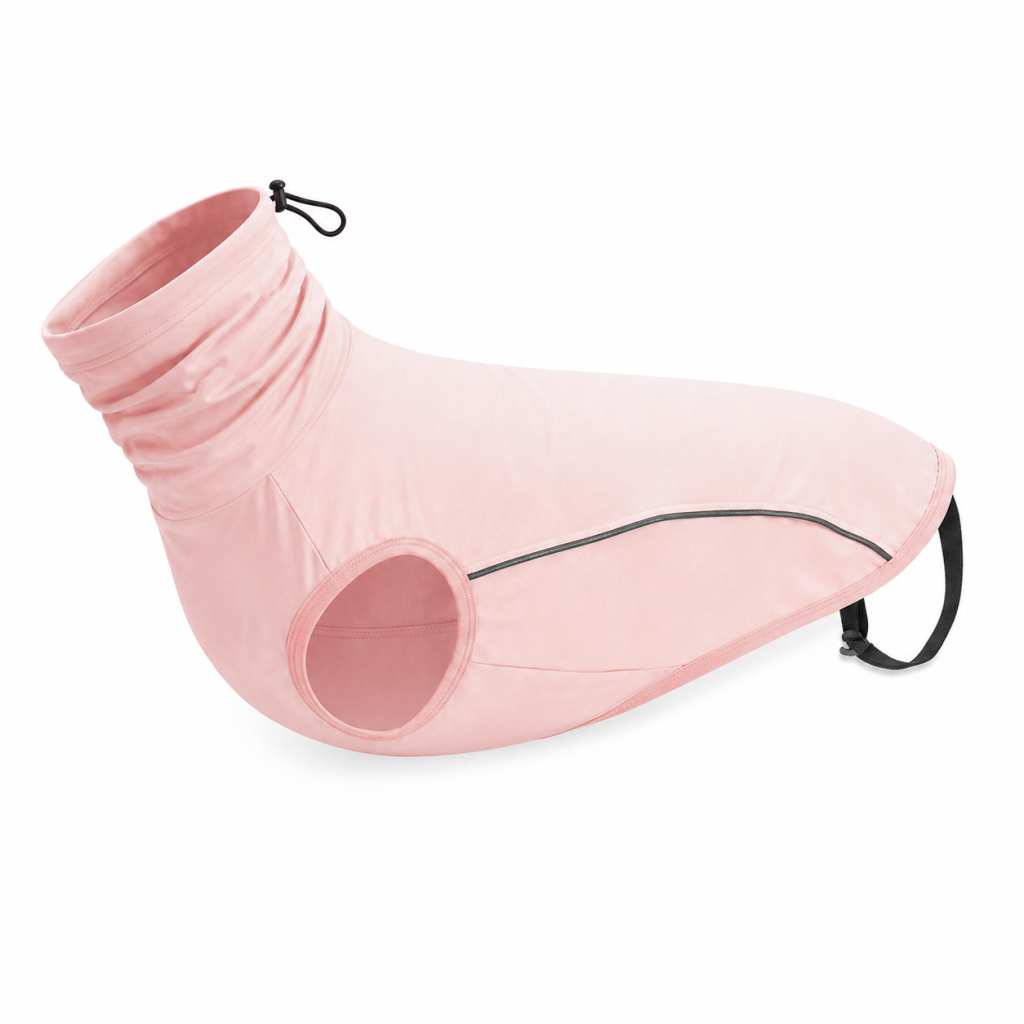
If your dog needs fitted sun and splash coverage rather than buoyancy support, use how to measure your dog for a rash guard and compare apparel options separately. A rash guard can sit under some life jackets only when it stays smooth, thin, and does not interfere with strap security; use the full guide on rash guard under life jacket fit checks if you plan to layer both pieces.
Bottom line
A good dog life jacket fit is snug at the chest, free at the shoulders, even through the flotation panels, and stable when wet. Measure first, test indoors, then do a short shallow-water check before any higher-risk outing. If the jacket shifts, rubs, blocks movement, or makes your dog uneasy, adjust the straps or choose another size before continuing. For a pre-outing error check, read dog life jacket mistakes next.
Last updated: September 15, 2026. Written by Talenori for dog waterwear shoppers comparing dog life jacket fit, buoyancy support, and supervised water-day safety.