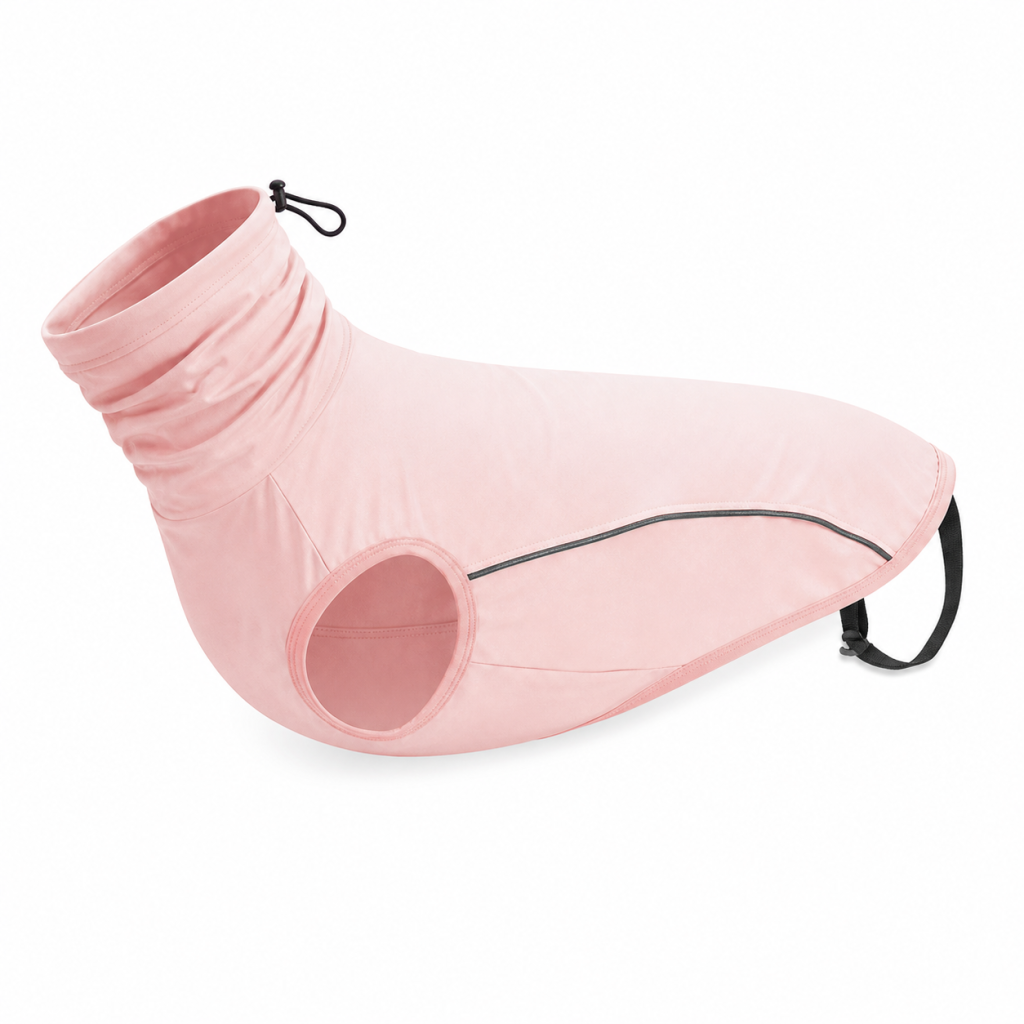
Dogs can wear Halloween costumes, but only when the individual dog is comfortable and the outfit leaves normal movement, vision, hearing, breathing, and communication unchanged. Try the costume at home before the event. Watch your dog walk, sit, turn, and take treats; remove it at the first sign of stress or restricted movement. Skip masks, tight neck openings, dangling parts, and anything that covers the eyes, ears, or mouth. For a dog who dislikes clothing, a festive collar or bandana is the better costume.
First decide whether your dog should dress up at all
A costume is optional. Your dog does not understand that an outfit is meant to be funny for a photograph or clever at a parade. Some dogs are used to fitted apparel and carry on normally. Others freeze, paw at the fabric, hide, or become overwhelmed by the clothing before the event has even started.
The ASPCA’s Halloween safety guidance recommends dressing a pet only when you know the animal enjoys it. It also says a costume should not limit movement, sight, breathing, barking, or meowing. That is the useful starting point: participation depends on the dog in front of you, not on how lightweight the outfit looks in your hand.
A practical yes-or-no test: if your dog cannot move and behave much as usual while wearing the outfit, take it off. A bandana, reflective collar, or no costume at all is a complete Halloween look.
Seven checks before a parade, party, or photo
1. Introduce one piece at home
Do not make the event entrance the first fitting. Put the simplest version of the outfit on in a quiet, familiar room for a brief check. Let your dog move without posing or being surrounded by people. If the costume has several pieces, test them separately; the hat, cape, and body panel that seem harmless on their own may be too much together.
Offer an ordinary cue your dog knows, such as walking toward you or sitting. The goal is not to train the dog to endure discomfort. It is to see whether familiar movement still looks easy. End the fitting while the dog is relaxed. Trying it on for longer does not turn a poor fit into a good one.
2. Clear the eyes, ears, nose, and mouth
Remove any piece that shifts toward the eyes, folds an ear, presses around the throat, or interferes with panting, drinking, taking a treat, or barking. Masks are especially difficult to justify because they can change both vision and communication. Headpieces can also slide once a dog shakes, lowers the head, or meets a leash under tension.
Check from the front and both sides rather than judging from a photograph. You should be able to see the dog’s face clearly, and the dog should be able to look around without fabric moving across it.
3. Watch the shoulders and front legs
Walk the dog across a non-slip floor and watch several steps from the side. Shortened strides, elbows pushed outward, a stiff back, repeated stopping, or an unusual hop suggest that the outfit is changing movement. Look at the armpits and front edge of the costume for tight seams or rubbing points.
A common two-finger check can be a useful first screen at the neck or straps, but it is not proof of correct fit. Different materials and designs sit differently, and a loose piece can snag just as a tight piece can restrict. Normal movement is the more important result.
4. Remove loose and chewable parts
Inspect buttons, bells, pom-poms, elastic loops, strings, wings, and decorative lights from the dog’s point of view. If the dog can turn and reach a part with the mouth, assume it may be chewed. The ASPCA cautions that small, dangling, or easily chewed-off costume pieces can become choking hazards. The safest fix is usually to remove the accessory, not supervise it more intensely.
Also check the underside. Long fabric can catch a paw, collect around the legs, or drag on the ground. Keep the leash attachment visible and usable; do not clip a leash to a decorative loop unless the product specifically identifies it as a load-bearing attachment point.
5. Read behavior as part of the fit
A technically fastened outfit may still be wrong for the dog. VCA Animal Hospitals’ veterinarian-reviewed Halloween guidance lists low or tucked tails, ears held back, lip licking, yawning, pacing, shaking, panting, widened eyes, and dilated pupils among subtle anxiety signs to watch for. Freezing, trying to rub the costume off, hiding, or refusing a familiar treat are also reasons to pause.
Do not wait for growling or frantic escape attempts. Quiet distress is still distress. Remove the outfit in a calm place and give the dog space. If the dog is already uneasy around crowds, doorbells, children, or unfamiliar clothing, Halloween night is not the time to combine those challenges.
6. Prepare for darkness and open doors
Costume color is not the same as nighttime visibility. Use a securely fitted collar or harness, identification tag, short fixed-length leash, and a separate reflective or illuminated item designed for visibility. Make sure added lights do not dangle where they can be chewed and do not replace a leash.
The ASPCA recommends proper identification, a secure leash, and a reflective collar after dark because costumes and increased street activity can startle pets. Check that microchip contact details and the phone number on the tag are current before the event. At home, create a calm room away from the front door if repeated visitors make your dog anxious or increase the chance of an escape.
7. Set an exit plan before you leave
Choose a short route with space to step away from people and dogs. Bring water and know where you can remove the costume without the dog slipping a collar or bolting. Do not rely on completing a parade route once you have started. Leaving after five calm minutes is better than staying until the dog is overloaded.
| What you observe | What to do |
|---|---|
| Normal stride, relaxed face, takes treats normally | Continue briefly and keep checking as the setting changes. |
| Costume rotates, rides up, or catches a leg | Stop and remove it; do not keep tightening an unsuitable design. |
| Repeated lip licking, yawning, tucked tail, shaking, or freezing | Move to a quiet space and take the costume off. |
| Restricted panting, breathing difficulty, collapse, or severe distress | Remove the item immediately and seek urgent veterinary help. |
| Crowd or doorway is making the dog anxious | Leave the event or use a quiet room at home. |
Can a dog life jacket double as a Halloween costume?
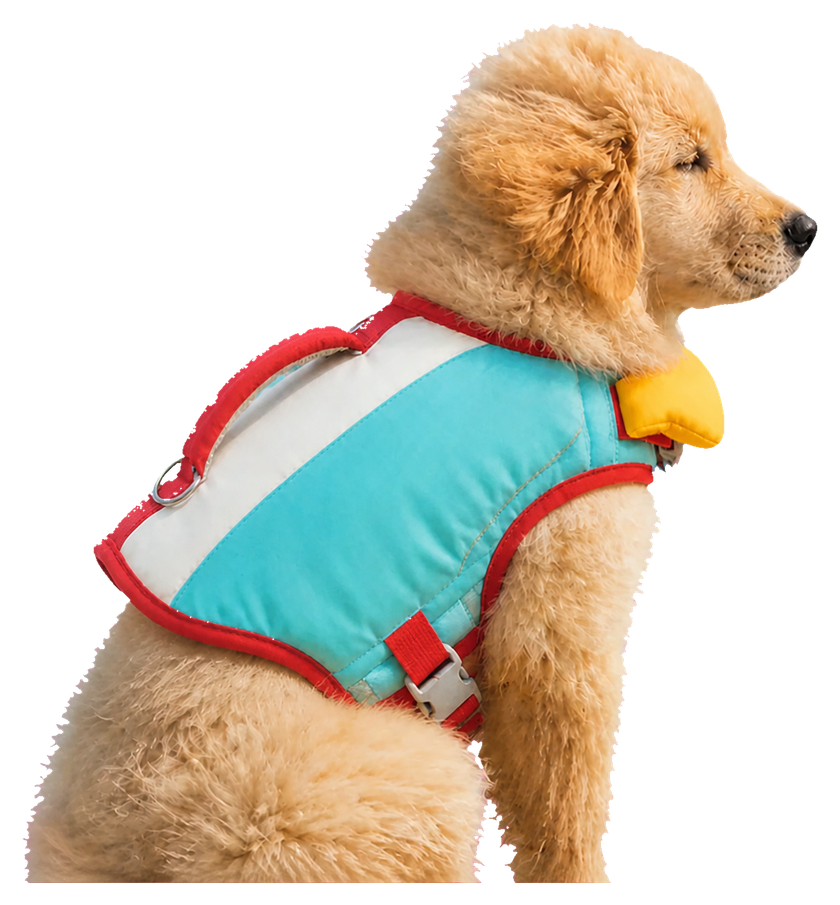
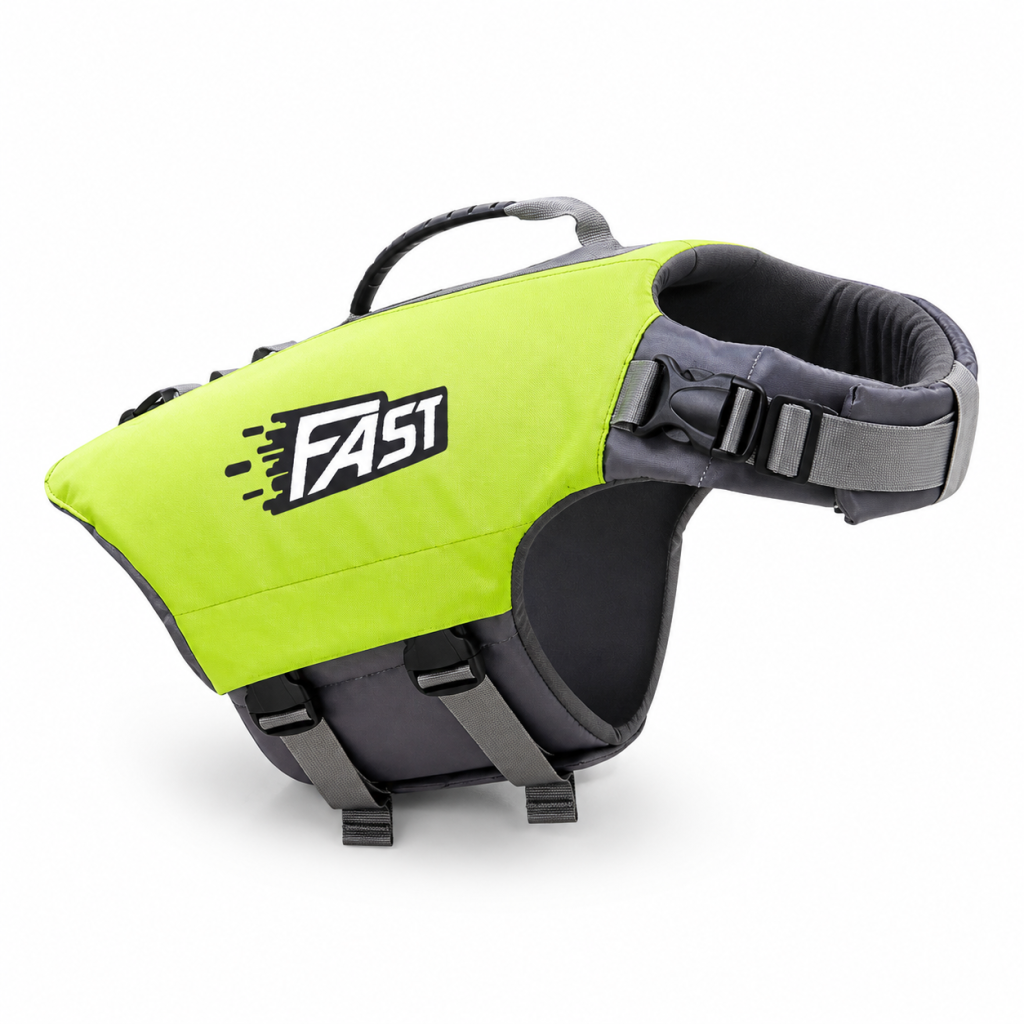
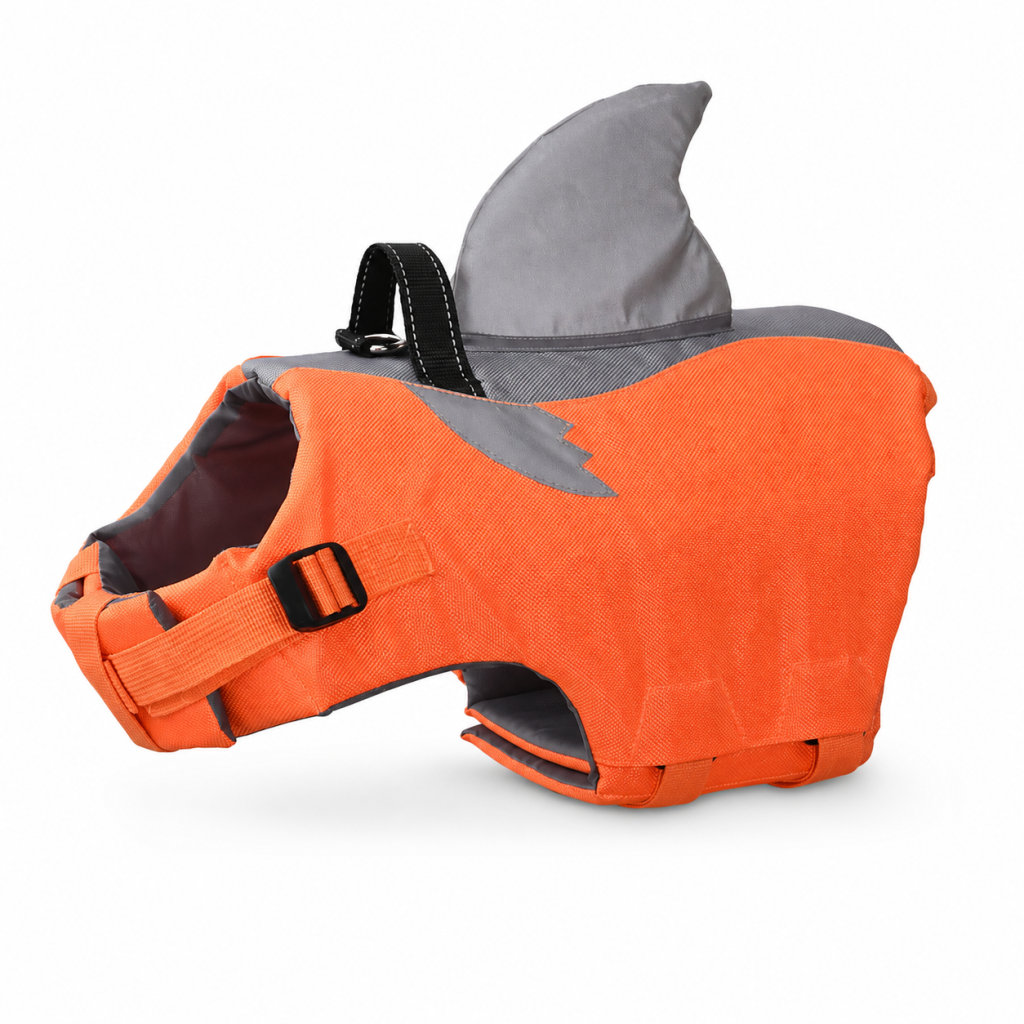
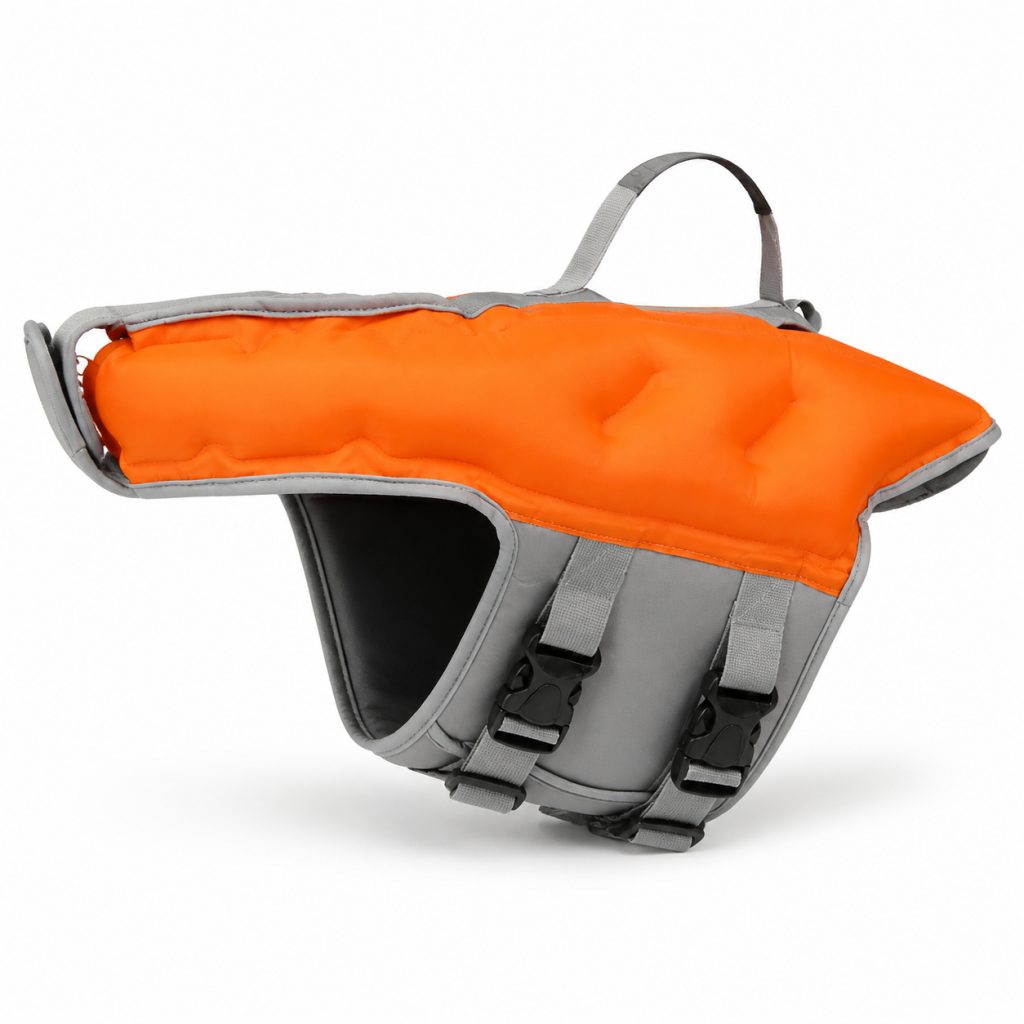
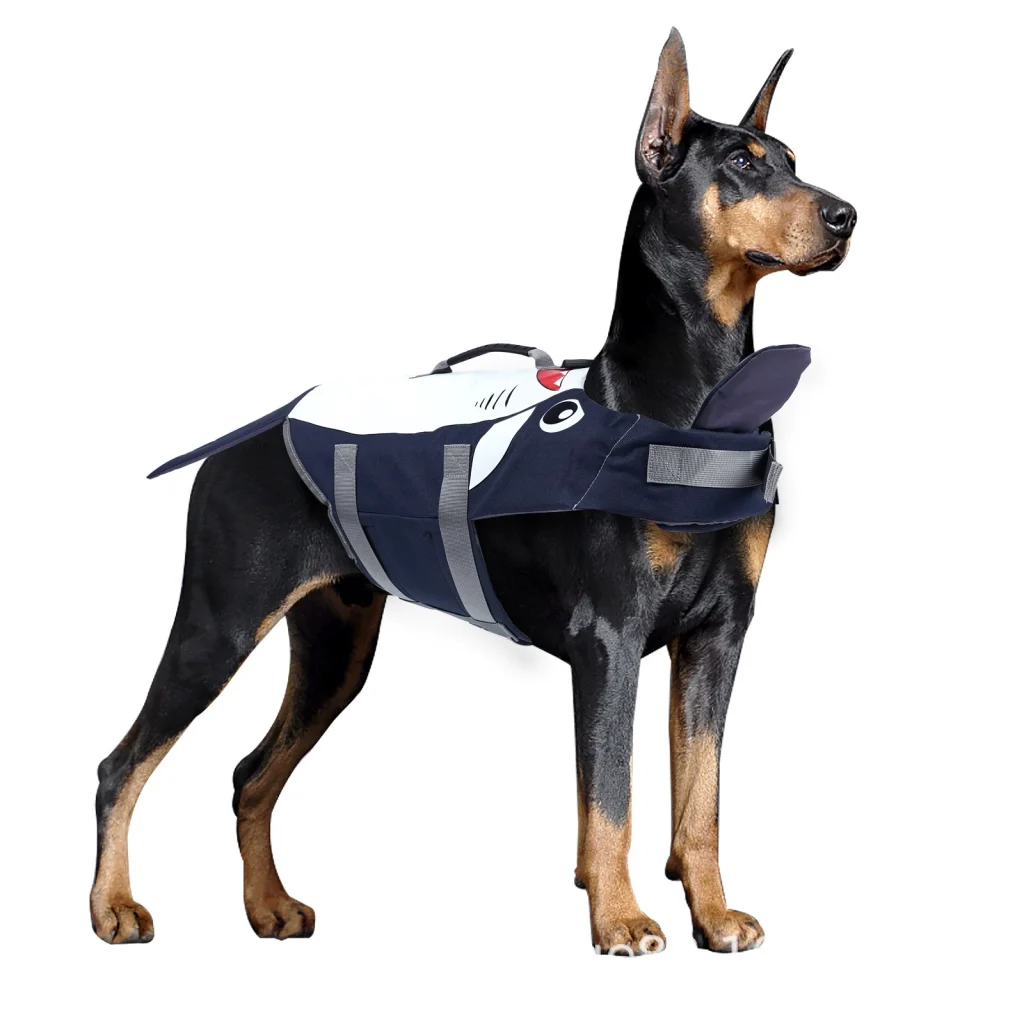
A shark-, dinosaur-, or bee-shaped dog life jacket may look costume-like in a photograph, but it is still water gear first. Do not buy or fit one as if it were a loose novelty costume. The flotation panels, neck opening, belly straps, buckles, and rescue handle all have functional positions. If the event is entirely on dry land, confirm that the extra bulk does not change the dog’s gait or cause overheating, rubbing, or crowding around the neck.
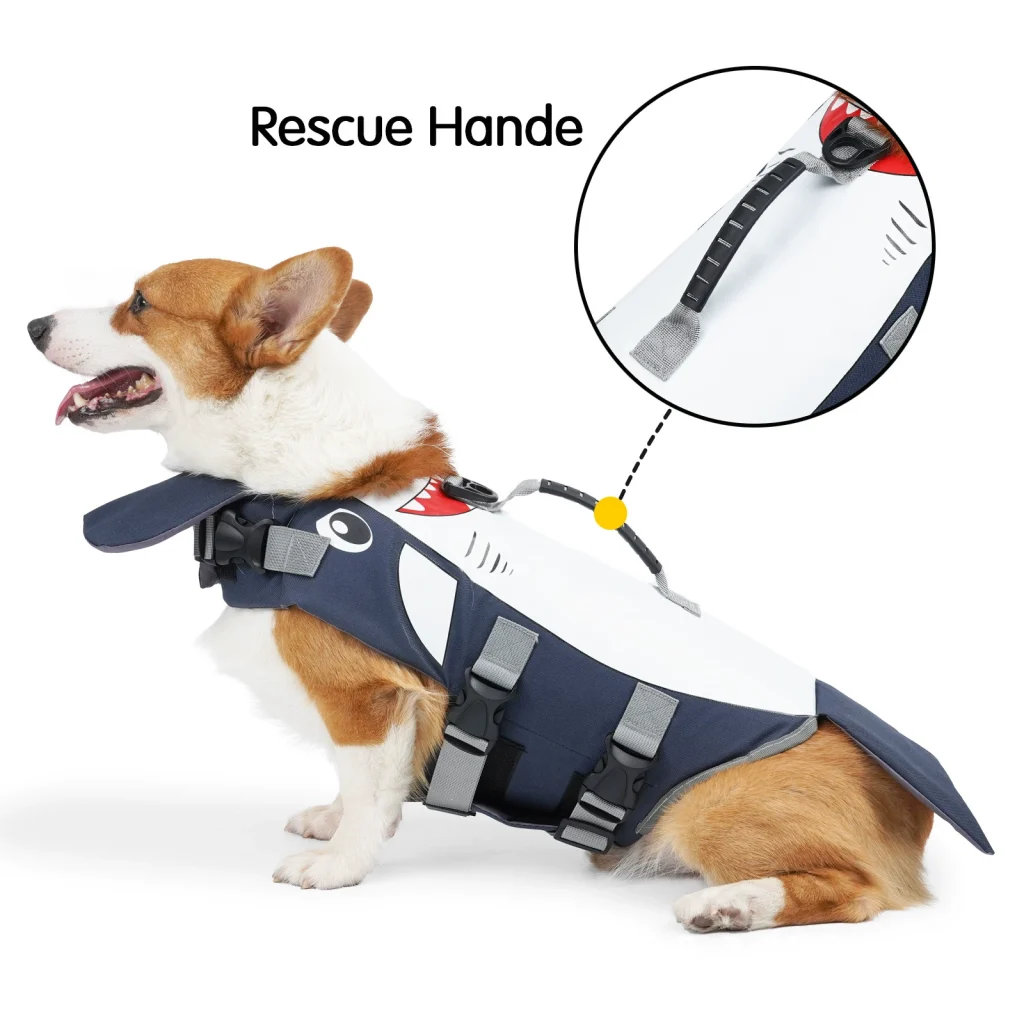
The jacket shown is Talenori’s Shark-Style Dog Life Jacket with Easy-Move Fit. It can provide a playful shark silhouette for a brief dry-land photo or pet-friendly event when it fits comfortably. That does not mean every dog will enjoy wearing it, and it should come off once the dog becomes warm or uncomfortable.
If the same jacket will later be used near water, start over with the water-safety decision. Read how a dog life jacket should fit, inspect the straps and buckles, and conduct a controlled shallow-water check. Passing a dry costume check does not prove flotation fit. A life jacket supports buoyancy; it does not replace close supervision or make unsuitable water safe.
Keep candy and decorations out of the plan
Put treats, wrappers, glow products, electrical cords, and small decorations where a dog cannot reach them. The ASPCA notes that chocolate can be dangerous for dogs and that sugar-free candy containing xylitol can cause serious problems. Wrappers and decorative pieces can also be swallowed even when the food itself is gone.
If you know or suspect that your dog ate chocolate, xylitol, medication, a wrapper, or a decoration, contact a veterinarian or animal poison service promptly. Do not wait for symptoms and do not induce vomiting unless a veterinary professional tells you to do so.
A one-minute check at the door
- Ask whether the dog is choosing to move normally rather than merely tolerating the outfit.
- Confirm that eyes, ears, nose, mouth, throat, shoulders, and front legs are clear.
- Remove loose parts and confirm the leash is attached to proper walking equipment.
- Add identification and nighttime visibility without creating new chewable pieces.
- Keep candy away, choose a short route, and know how you will leave early.
The best Halloween outfit is the one your dog barely notices. When that is not possible, choose the simpler option. A relaxed dog in a bandana, reflective collar, or everyday harness has not missed the celebration.
Editorial note: Prepared for the Talenori Editorial Team with AI-assisted trend research and drafting. On October 12, 2026, the cited ASPCA and veterinarian-reviewed VCA guidance was checked against the source pages. The product identity, links, and two supplier product photographs were checked against Talenori’s current catalog and recent Journal image use. This article has not been reviewed by a veterinarian. It does not assume that every dog enjoys clothing, and it distinguishes dry-land costume comfort from life-jacket fit for water. Contact a veterinarian about breathing difficulty, severe distress, or suspected ingestion.