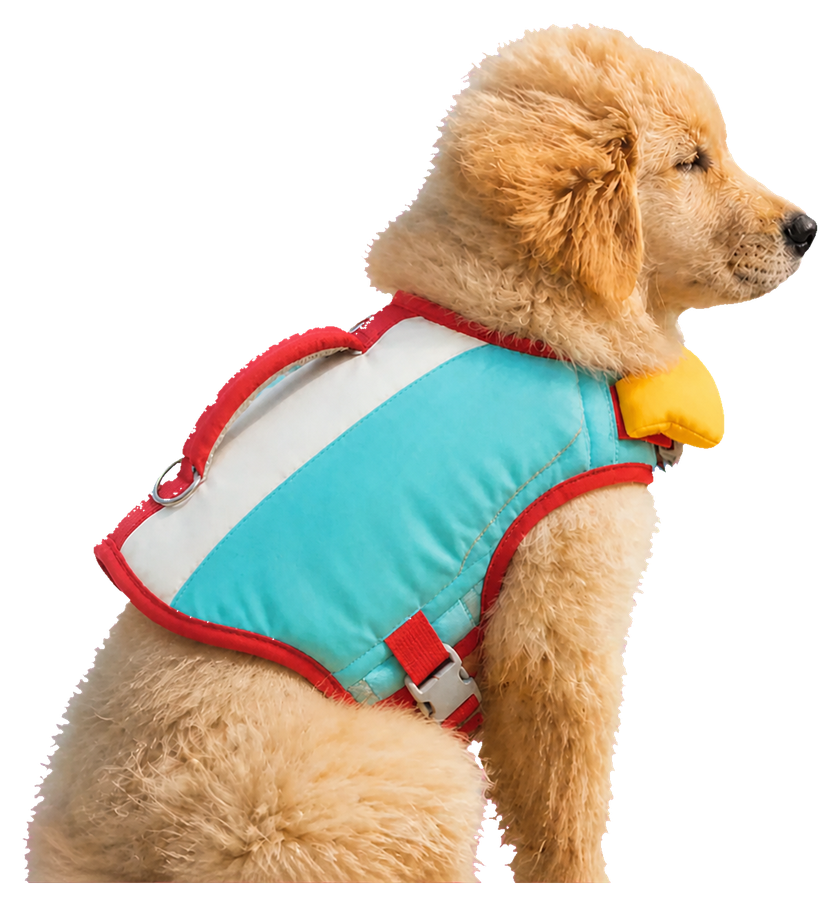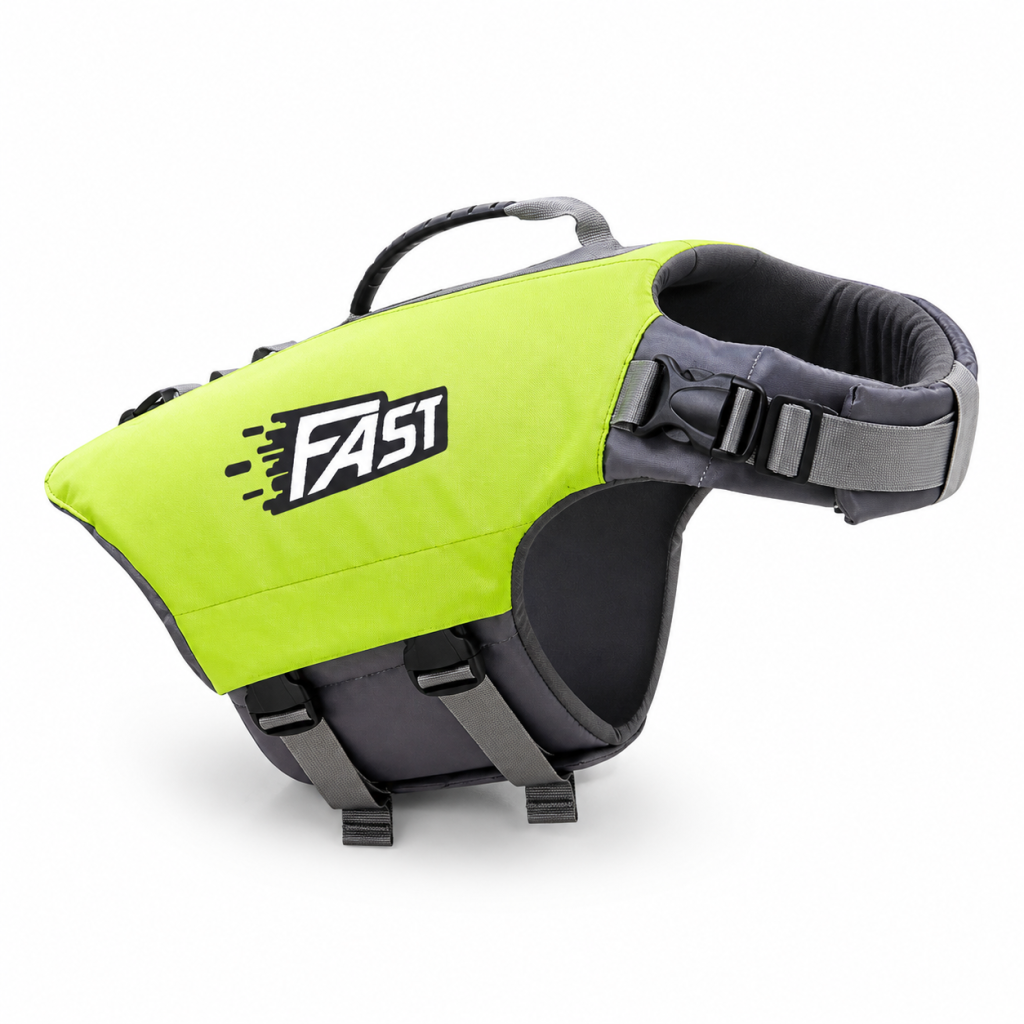
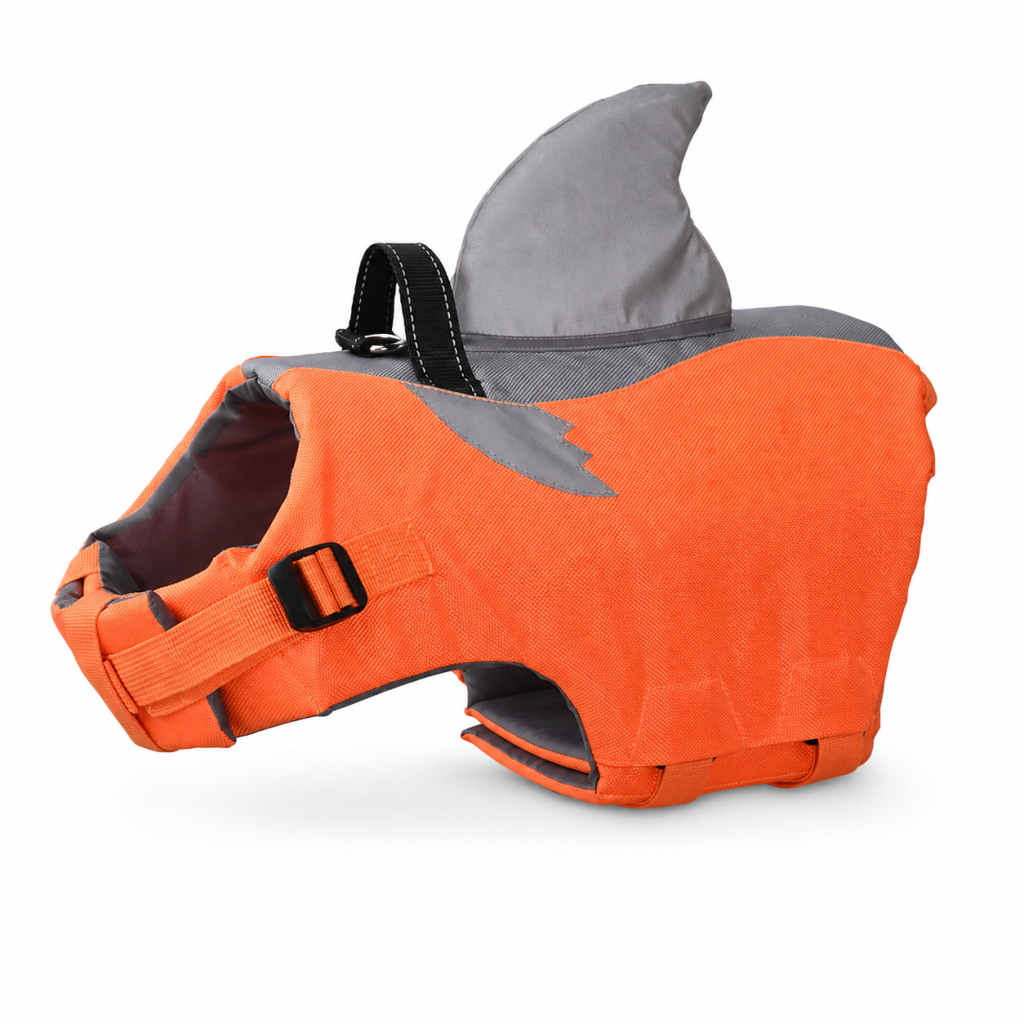
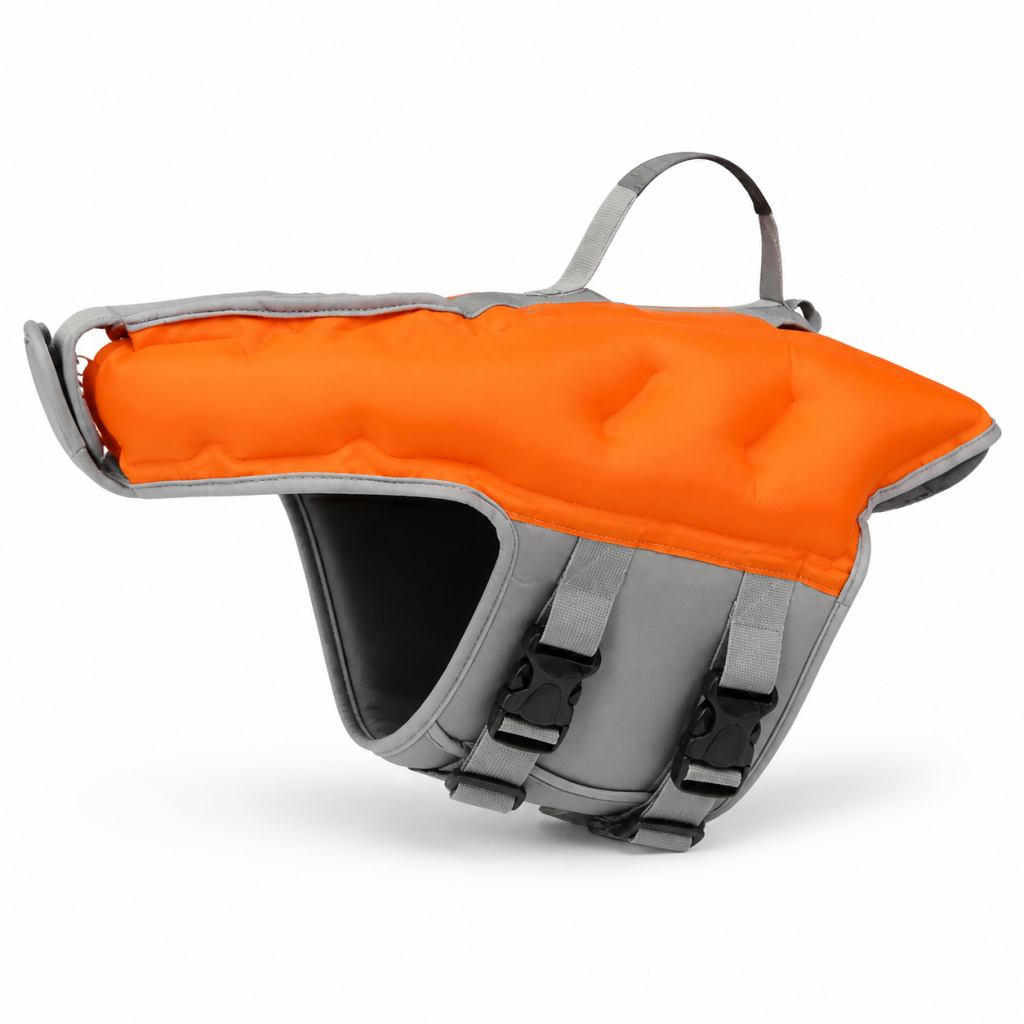
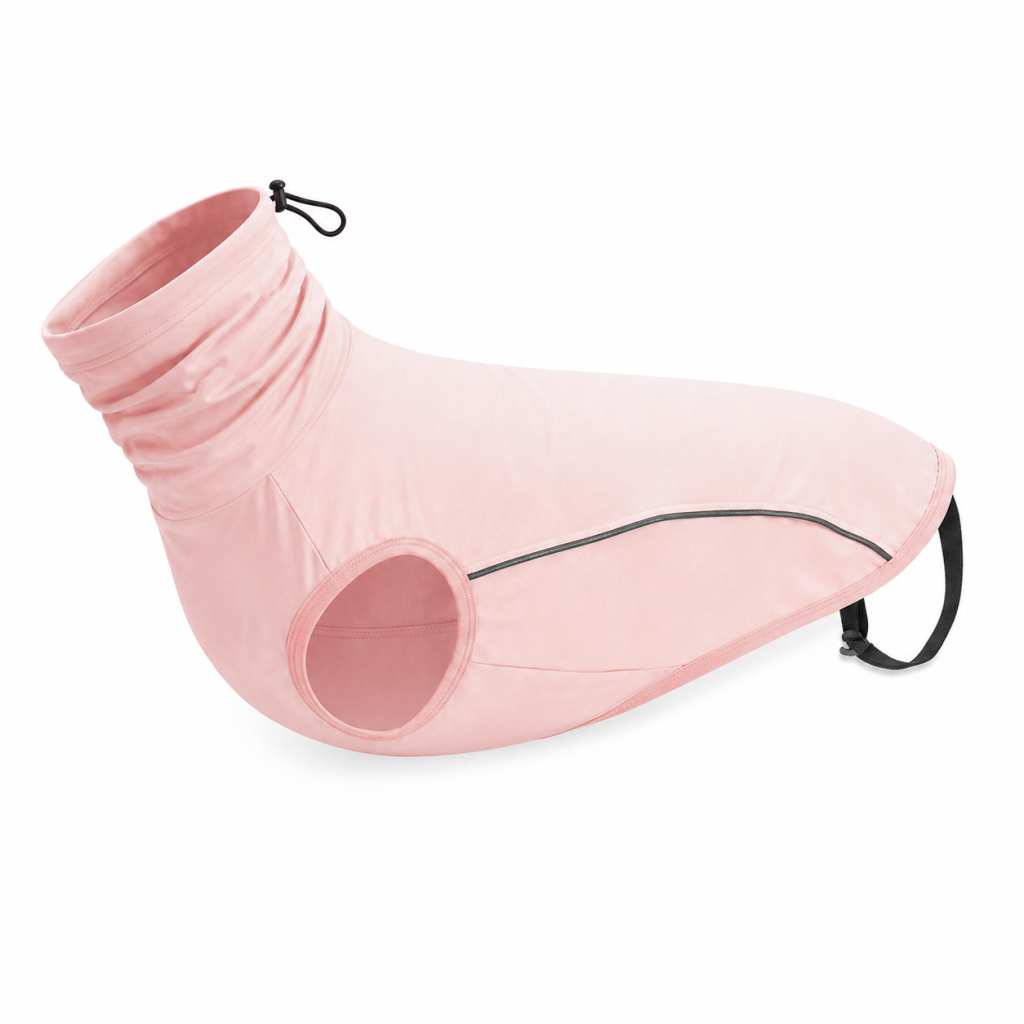

Yes, a dog can wear a thin rash guard under a life jacket, but only when the life jacket still fits securely and moves correctly. The rash guard should sit smooth against the body, with no bunching under the chest straps, belly straps, shoulder openings, or neck area. After layering, the life jacket should still stay centered, leave the front legs free, and pass the same dry and shallow-water fit checks you would use without the rash guard. If the jacket rides up, rotates, feels tighter at the throat, blocks shoulder movement, or becomes harder to buckle, remove the rash guard and use the life jacket by itself. Layering can help with light coverage, sun-aware outings, and sand or rub reduction, but it should never interfere with flotation panels, strap security, rescue handle stability, or close supervision.
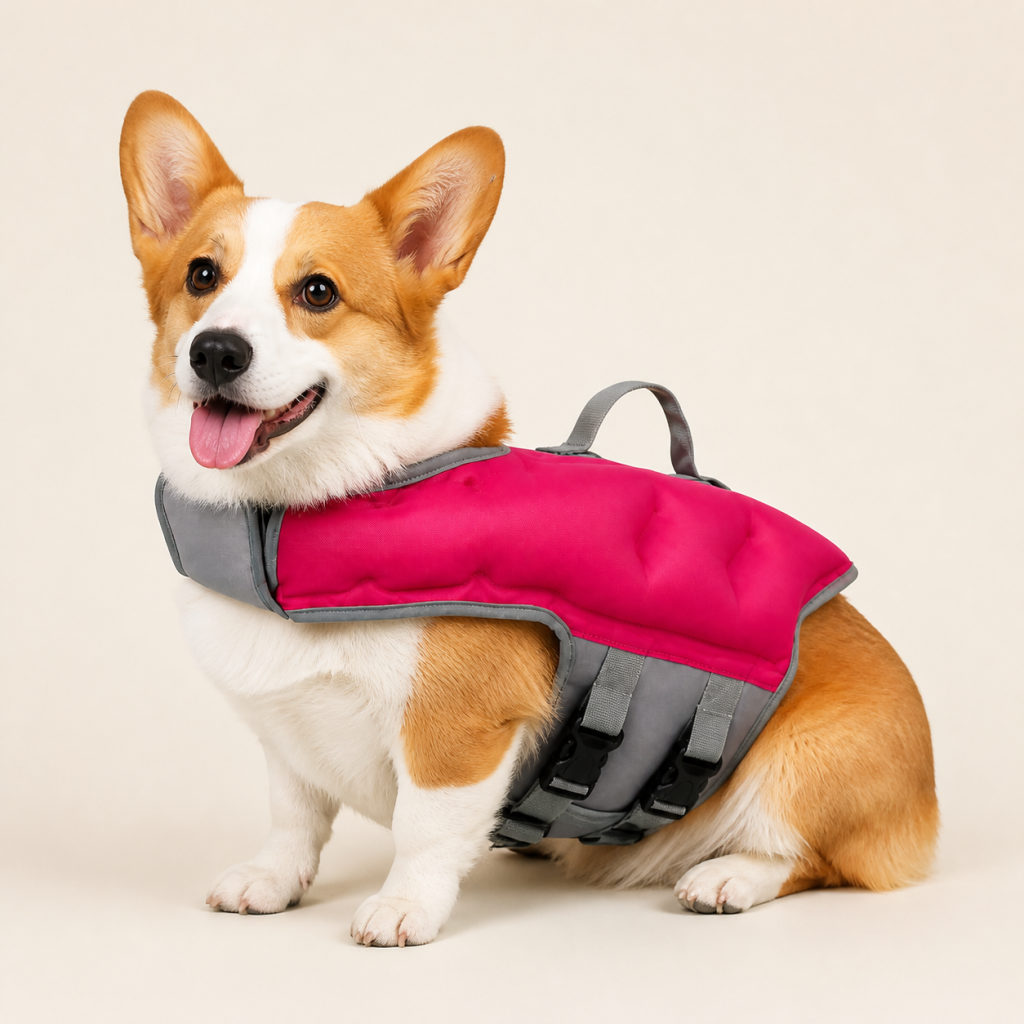
When does layering a rash guard under a life jacket make sense?
Layering can make sense when your dog needs both apparel-style coverage and buoyancy support. A rash guard can add a smooth barrier against sand, salt, sun, and light rubbing, while a dog life jacket provides flotation support for supervised water settings. The two pieces have different jobs, so the life jacket must remain the outer, controlling fit layer.
This setup is most useful for longer beach days, sunny paddleboard rests, dock time, or dogs whose short coat or sensitive skin benefits from a thin layer. It is not automatically better for every dog. Thick fabric, loose fabric, or a rash guard with raised seams can make the life jacket fit worse.
Quick answer for shoppers
Choose a rash guard under a life jacket only when the underlayer is thin, close-fitting, and dry-tested first. Fasten the life jacket over the rash guard, then check the chest, shoulders, belly straps, neck opening, and top handle. Your dog should be able to stand, sit, turn, lower the head, and step forward without shortened movement. You should still be able to fit about two fingers under the life jacket straps, and the jacket should not rotate around the body. If the rash guard creates wrinkles, strap pressure, or a tighter neck opening, skip the underlayer. For deep water, boating, docks, uncertain swimmers, puppies, senior dogs, and fatigue risk, the secure life jacket fit matters more than extra apparel coverage.
Layering checklist
| Check | Good sign | Do not layer if… |
|---|---|---|
| Rash guard fabric | Thin, smooth, and close to the body. | Fabric bunches, folds, or traps under straps. |
| Chest straps | Life jacket buckles normally over the rash guard. | You need to force the buckle or loosen straps too far. |
| Shoulders | Front legs move forward with a normal stride. | Your dog stiffens, shortens stride, or paws at the jacket. |
| Neck opening | Both layers sit below the throat without pressure. | The life jacket rides into the neck or changes breathing comfort. |
| Flotation panels | Panels sit evenly on both sides when dry and wet. | The jacket rolls, tilts, or slides forward. |
| Top handle | Handle steadies the jacket without shifting the whole setup. | The handle pulls fabric or moves the jacket out of position. |
What should you check before the first swim?
Do the dry fit check as one complete system. Put the rash guard on first, smooth the chest and shoulder areas, then fasten the life jacket. Ask your dog to stand, walk, sit, turn, and lower the head. The final outfit should feel stable, not compressed. If your dog cannot sit comfortably or starts walking differently, the layered fit is not ready for water.
The American Kennel Club advises that dog life jacket straps should allow movement and that a snug fit should still leave room under the straps. That guidance matters even more when an underlayer is added, because one extra layer can change strap tension and shoulder clearance.
Why shoulder and neck space matter most
Most layering problems show up around the shoulders and neck. The front legs need a full forward reach, and the life jacket should not press into the throat. If the rash guard hood, collar, or neckline sits high, it can stack fabric exactly where the life jacket needs clean contact. Choose the smoother setup, not the more covered one.
PetMD notes that a dog life jacket should allow full shoulder movement and avoid neck or throat pressure. For layered wear, treat that as a hard rule: no restriction at the shoulder, no pressure at the throat, and no buckles sitting on folded fabric.
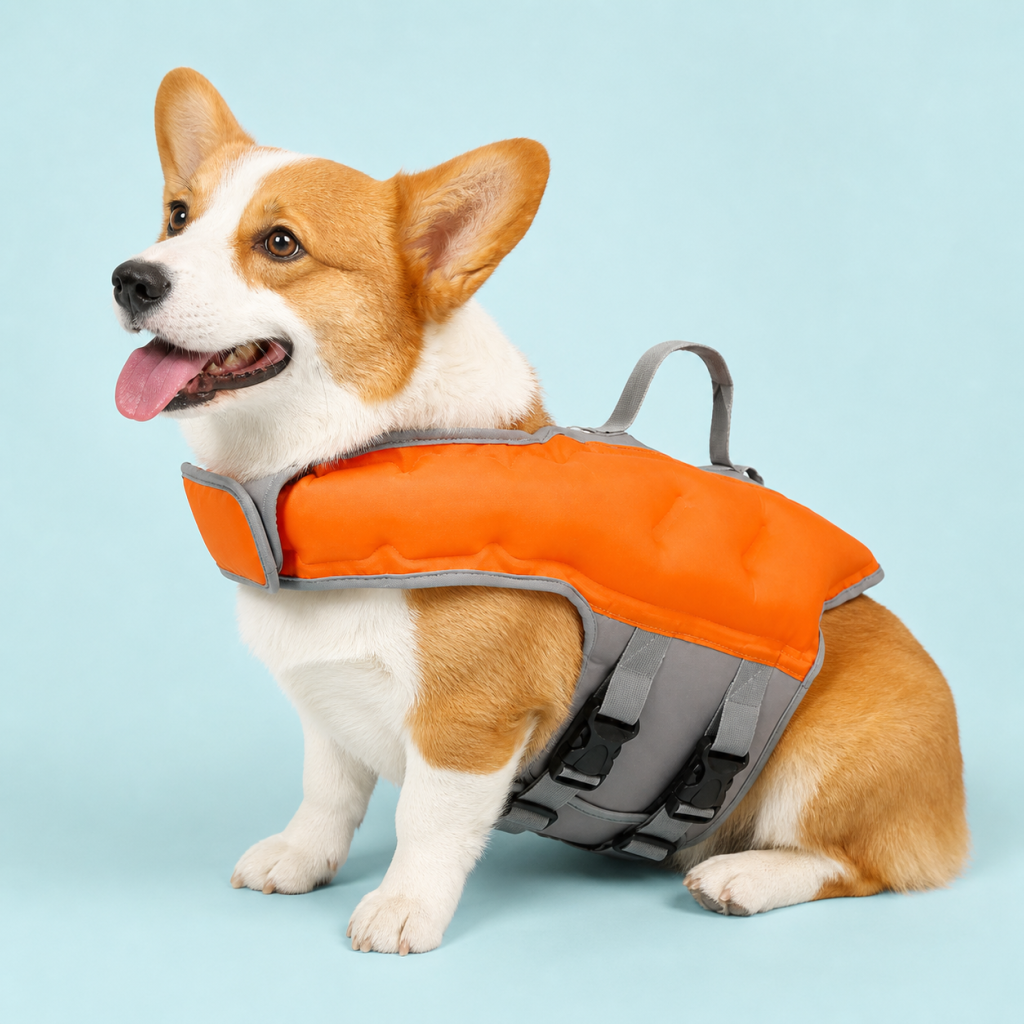
How do you test the layered fit in shallow water?
Start in calm, shallow water where your dog can exit easily. Keep the first test short. Watch whether the life jacket stays level after the rash guard gets wet, because wet fabric can settle, stretch, or create new wrinkles. Check the belly straps, shoulder openings, and front edge again after a few minutes.
The Ontario SPCA recommends a snug life jacket fit that still lets a dog move comfortably. In layered use, comfort and stability both have to pass twice: once indoors while dry, and once in shallow water when the rash guard and life jacket are wet.
When should your dog wear only the life jacket?
Use only the life jacket when water risk is higher or fit is uncertain. That includes boating, docks, deep pools, cold water, currents, tired swimmers, puppies, senior dogs, and dogs still learning how to swim. If the life jacket fits better without the rash guard, remove the rash guard. Buoyancy support and secure handling are more important than extra coverage.
Also skip layering if your dog runs hot, dislikes clothing, has thick fur that already creates bulk, or shows stress when dressed. A dog who is calm in one garment may not be comfortable in two. Comfort matters because a tense dog is harder to supervise and guide around water.
How should you choose the two pieces?
Start with the life jacket fit, then choose the rash guard around it. A close, lightweight rash guard is easier to layer than thick swimwear, decorative fabric, or anything with bulky seams. Measure chest girth first, then confirm back length and neck comfort. For the life jacket, follow how a dog life jacket should fit. For the underlayer, use how to measure your dog for a rash guard.
Talenori shoppers can compare lightweight coverage options such as the Dog Sun Protection Vest with Cooling Nylon UV Cover and fitted swim styles like the Shoreline dog rash guard. For outer buoyancy support, browse the dog life jacket collection and choose the jacket that fits securely over your dog’s actual measured chest.
Common layering mistakes
- Choosing coverage first: pick the life jacket fit first, then decide whether a thin underlayer can work.
- Ignoring wet fit: a setup that looks smooth indoors may shift when both layers are wet.
- Layering bulky fabric: extra thickness can change strap tension and flotation-panel position.
- Covering a poor jacket fit: a rash guard cannot fix a life jacket that rotates, rides up, or rubs.
- Missing the broader checklist: review dog life jacket mistakes before water day so strap, handle, supervision, and shallow-water checks are covered too.
- Forgetting rinse care: rinse both layers after salt water, chlorine, or sand so fabric and straps dry cleanly.
Care after layered wear
After swimming, remove the life jacket first and check whether the rash guard has left any red marks or rubbed areas. Rinse both items in cool fresh water, flatten straps, open closures, and let each piece air dry fully before storage. Layered gear traps more moisture between pieces, so do not store the rash guard inside the life jacket while damp.
For cleaning and drying steps after beach or pool use, use Talenori’s swimwear care guide. For broader planning around heat, fatigue, docks, and supervision, keep the water safety guide nearby.
Bottom line
A rash guard can go under a dog life jacket when it is thin, smooth, and does not change the jacket’s secure fit. The life jacket must still stay centered, leave the shoulders free, avoid neck pressure, and pass a shallow-water check. If layering creates any doubt, use the life jacket by itself and save the rash guard for lower-risk splash, sun, or beach coverage.
Last updated: September 15, 2026. Written by Talenori for dog waterwear shoppers comparing rash guards, life jackets, layered fit, and supervised water-day safety.